
Nepali Handicrafts: A Guide to the Crafts of Nepal
Search for Nepali handicrafts and you will find everything from bronze deities to painted scrolls to singing bowls. That range is real: Nepal's craft traditions span metalwork, painting, wood carving, and more, and much of it traces back to one community of artisans in the Kathmandu Valley. This guide introduces the major craft traditions of Nepal, what the reference sources say about their history, and how each one shows up in our own collection.
The Newar craft tradition
Much of Nepal's craft heritage is tied to the Newar people of the Kathmandu Valley. Wikipedia's article on Newar art credits the Newars as the creators of most examples of art and architecture in Nepal, and describes traditional Newar art as basically religious art. The same article lists the crafts in which Newar artisans worked: paubha painting, murals, copper and brass sculpture, stone and wooden sculpture, wood carving, repoussé, and metal statues of Buddhist and Hindu deities made by the lost-wax casting process. The earliest dated paubha discovered so far, the Vasudhara Mandala, was painted in 1365 AD, and the article notes that from as early as the seventh century, visitors recorded the skill of Newar artists, whose influence reached the art of Tibet and China.
Metal statues and the lost-wax process
Many Nepali statues are cast in brass, bronze, or copper using the lost-wax process. Wikipedia's article on lost-wax casting describes it as the process by which a duplicate sculpture is cast from an original, with a wax model encased in a mould that is then heated so the wax melts away and molten metal takes its place. The technique is ancient: the same article notes that the oldest known examples are approximately 6,500 years old, attributed to gold artefacts from Bulgaria's Varna Necropolis. The Newar art article confirms that Newar metal statues of Buddhist and Hindu deities are made by this process.
Two examples from the collection, described as their listings and photos show them:
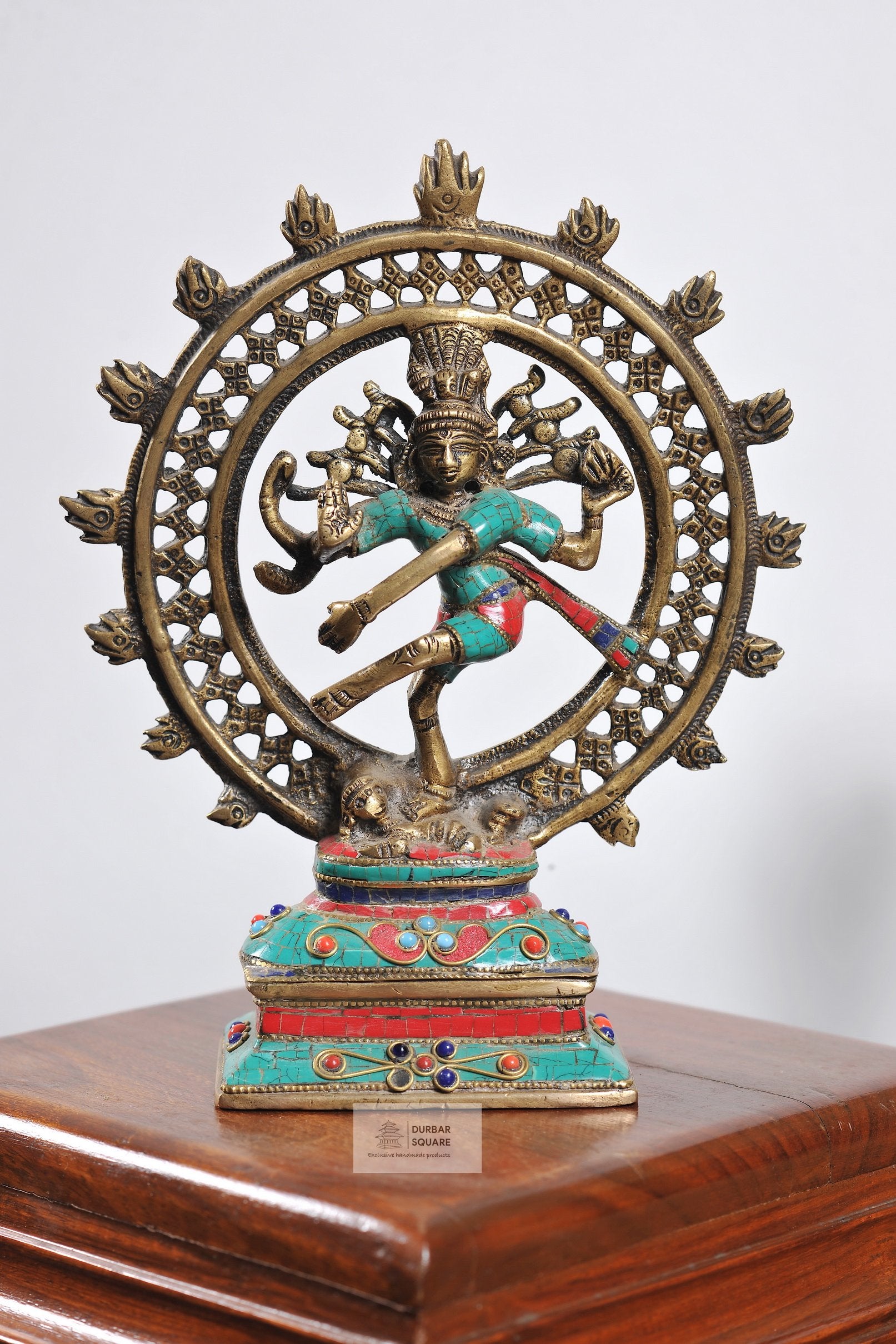
Natraj Statue, $178. The listing describes a handcrafted bronze Nataraja statue with various semi-precious stones. The photo shows Shiva dancing within the ring of flames, with turquoise and coral-toned inlay on the body and base. You can find it among the store's statues of Hindu deities. For the story behind the dancing form, see our article on the meaning of Shiva's cosmic dance.
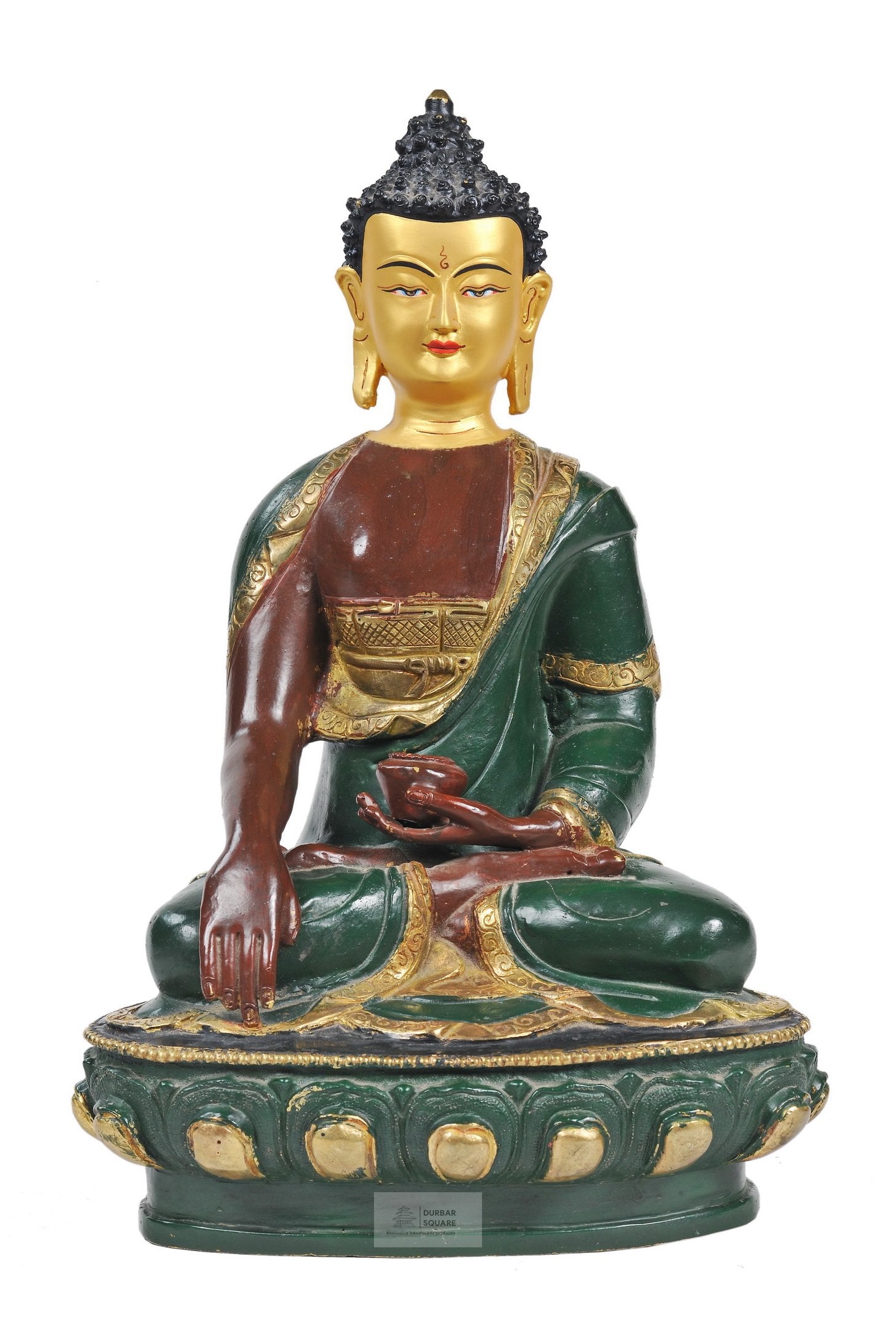
Shakyamuni, Bhumisparsha "Earth Touching" Buddha Statue, $847. The listing describes a handcrafted, gold-plated copper statue with a green finish and gold-dusted face, shown in the Bhumisparsha mudra. The photo matches: the right hand reaches down to touch the earth while the left rests in the lap holding a bowl. It sits in the store's Shakyamuni Buddha collection.
Thangka and paubha painting
A thangka is a painting on cotton or silk, usually depicting a Buddhist deity, scene, or mandala. Wikipedia's thangka article notes that the word means "thing that one unrolls" in Classical Tibetan, and that thangkas were traditionally kept unframed and rolled up when not on display; most were intended for personal meditation or the instruction of monastic students. The same article records that the earliest surviving thangka paintings from Nepal date to about the 14th century, and that Nepalese artisans were dispatched to the courts of Chinese emperors, with the Nepalese artist and architect Araniko becoming chief Imperial artist of Kublai Khan. It also notes that in Nepal, 24-carat gold is plated over parts of some thangka paintings. In the Newari language these devotional paintings are called paubha.
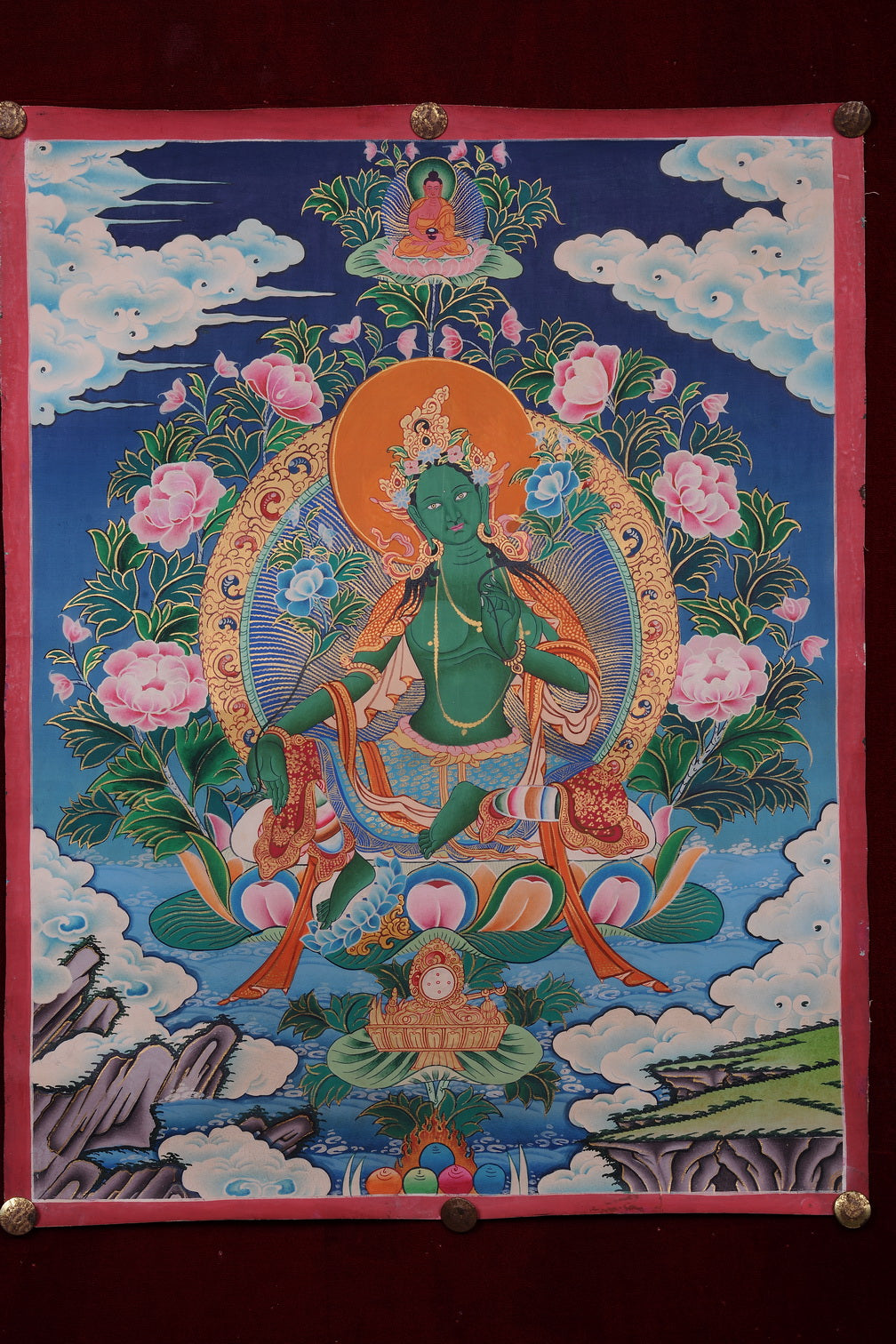
Golden Accented Green Tara Thangka, $263. The listing describes a hand-painted Green Tara thangka, 53 by 40 cm, adorned with gold accents. The photo shows Green Tara seated on a lotus against a deep blue background, framed by flowers and a gilded halo. Browse more in the thangka collection, or read our guide to Green Tara's meaning and iconography.
Singing bowls
Singing bowls are a form of standing bell, an inverted bell supported from below with the rim uppermost. Wikipedia's standing bell article explains that they are played by striking or by rotating a mallet around the outside rim to produce a sustained note. The same article is honest about the history: standing bells originated in China, the manufacture and use of bowls specifically for "singing" is believed to be a modern phenomenon, and such bowls began to be imported to the West from around the early 1970s. It also reports that bowls marketed as Tibetan ritual instruments have been called "dharma products" that in fact come from northern India or Nepal. We tell that story in full in our honest history of the so-called Tibetan bowl.
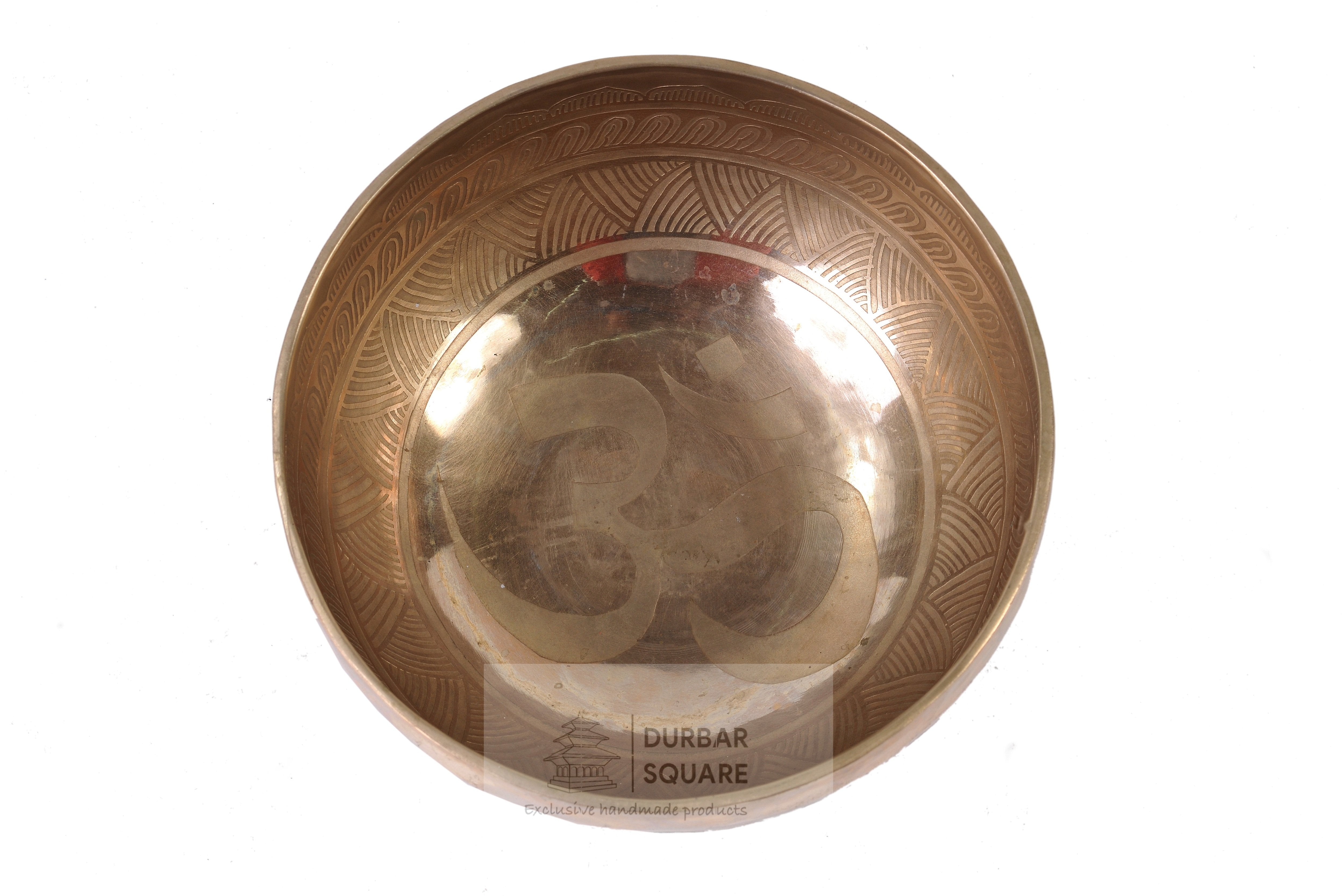
Om Singing Bowl, $236. The listing describes a handcrafted singing bowl with the Om symbol engraved inside, the mantra "Om mani padme hum" engraved outside, and Buddha eyes below. The photo shows the etched Om in the bowl's centre and a patterned rim. See the rest of the singing bowl collection, and if you are choosing one, our buyer's guide to size, metal and sound can help.
Where to start
If you are new to Nepali handicrafts, start with the tradition that draws you most: a cast statue, a hand-painted thangka, or a singing bowl. Each piece in the collection is described in its own listing with materials, dimensions, and current pricing, and our growing library of guides covers the stories behind the forms.
Sources
- Wikipedia: Newar art - the Newar craft tradition, paubha painting, lost-wax metal statuary and wood carving
- Wikipedia: Lost-wax casting - the casting process and its history
- Wikipedia: Thangka - definition, history and the Nepal tradition
- Wikipedia: Standing bell - what singing bowls are and their documented history
Product details and prices are from the current Durbar Square listings at the time of writing and may change. Product descriptions reflect the store's own listings.