
Singing Bowls: An Honest History of the So-Called Tibetan Bowl
The singing bowl comes with a tangled story. Merchants across the Kathmandu Valley tell customers that the bowls are ancient and Himalayan (Tricycle: The Buddhist Review). The documented record tells a more interesting truth, and it is one that makes a well-made bowl no less worth owning.
What a singing bowl actually is
A singing bowl is a kind of standing bell: an inverted, bowl-shaped bell supported from below with its rim uppermost, made in sizes from a few centimetres to a metre across. Such bells are usually played by striking; the ones called singing bowls can also be played by rotating a mallet around the outside rim to produce a sustained note (Wikipedia: Standing bell). Struck bowls do have a documented place in Buddhist practice, where they accompany periods of meditation and chanting; the same source notes that in the historical practice it documents, Buddhist ritual made no use of the "singing" mode of playing.
An older family, a younger star
Standing bells as a family are genuinely old. There is evidence that the metal bell originated in China, with Shang dynasty bronze bells from the 16th to 11th centuries BCE among the oldest bronze objects found there; an early standing form called the nao was mounted on a stem, rim uppermost, and struck from the outside (Wikipedia: Standing bell).
The singing bowl as we know it is much younger. Bowls capable of singing began to be imported to the West only from around the early 1970s, and the manufacture and use of bowls specifically for singing is believed to be a modern phenomenon: historical accounts of Tibetan music, including a visitor's notes from 1903-1904, do not mention them (Wikipedia: Standing bell). An investigation in Tricycle: The Buddhist Review reaches the same conclusion: the bowls first appear in the written record with the 1972 new-age album Tibetan Bells by American musicians Henry Wolff and Nancy Hennings (Tricycle: Where Did "Tibetan" Singing Bowls Really Come From?). The standing bell entry goes further, noting that bowls sold today as Tibetan ritual instruments are, in its words, neither Tibetan nor ritual in origin and come from northern India or Nepal (Wikipedia: Standing bell).
Why the honest story is the better one
One reading of this history is that it costs the bowl nothing. The craft is real: metalwork has deep Newar roots, with crafts from wood carving to metallurgy flourishing among the Newar of Nepal between the 10th and 16th centuries (Encyclopaedia Britannica: Newar). And a bowl that sings when you circle the rim is a small piece of acoustic engineering in its own right. The relaxation and meditation uses people enjoy today, from yoga studios to sound baths, are documented as modern practices (Wikipedia: Standing bell) - which makes them living culture rather than borrowed antiquity. Like all symbolism, the meaning works best as an invitation, not a rule.
Singing bowls in our collection
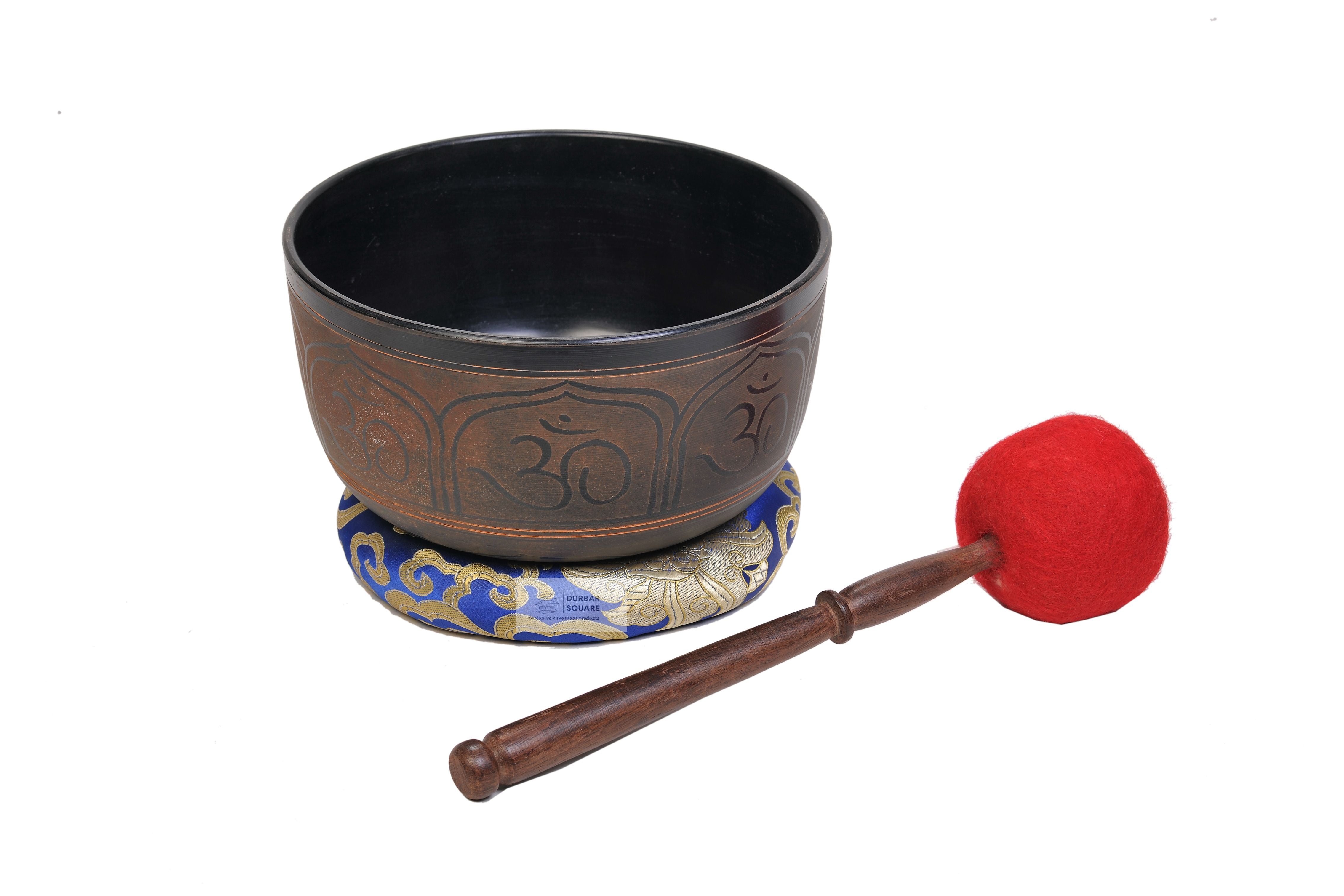
The Om Carved Singing Bowl is a hand-carved metal bowl supplied with its cushion and striker, the outside worked with the Om symbol. As our product description notes, a bowl like this vibrates with a rich, deep tone when played.
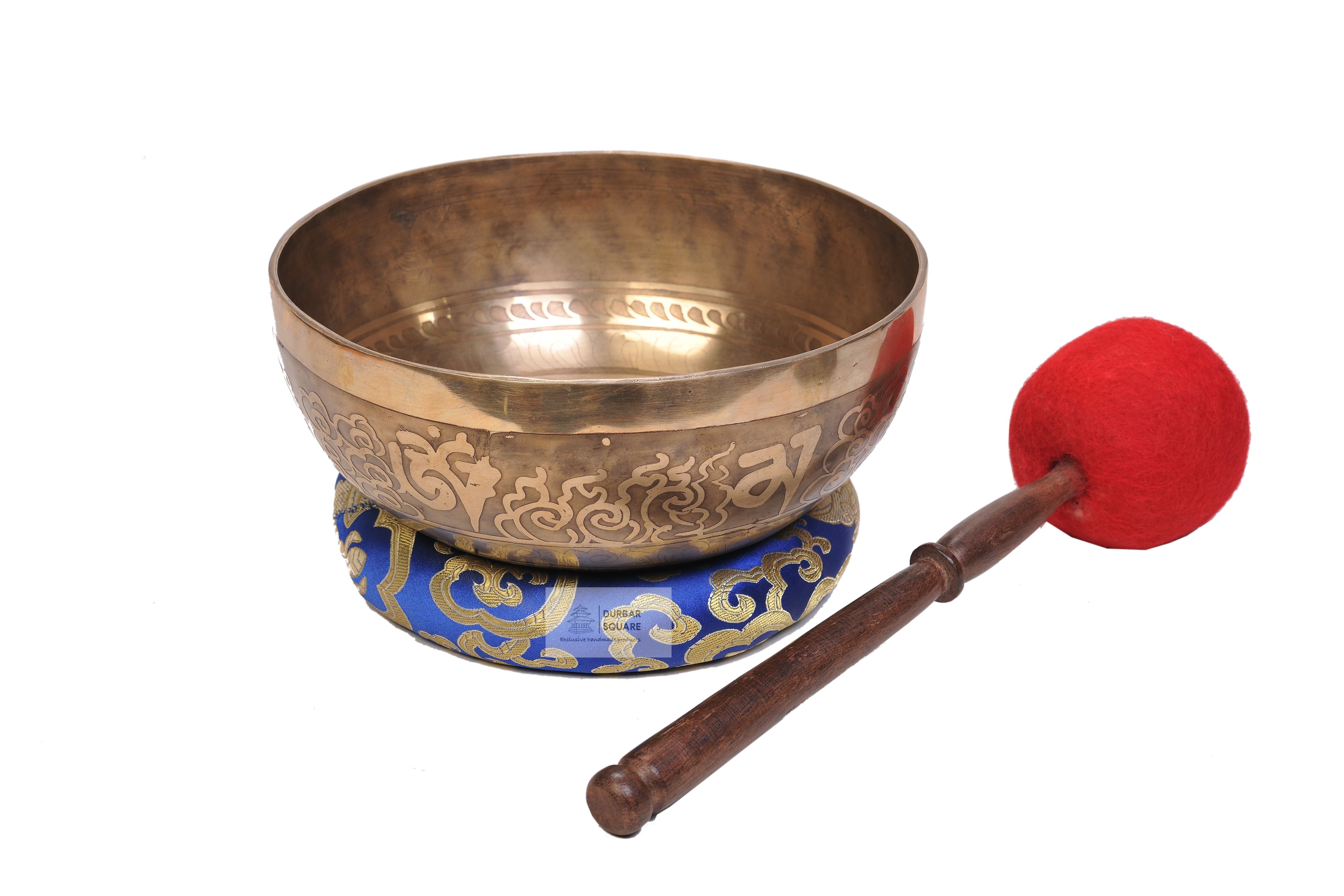
The Om Mani Padme Hum Singing Bowl is a polished gold-toned bowl engraved with the six-syllable mantra, also supplied with cushion and striker. Our product description notes that Om Mani Padme Hum is the most frequently used mantra in Buddhism.
Browse the full range in our singing bowls collection.
Sources: Wikipedia: Standing bell; Tricycle: The Buddhist Review, Where Did "Tibetan" Singing Bowls Really Come From?; Encyclopaedia Britannica: Newar. The playing-tone and mantra notes are from our own product descriptions.