
Kumari: Nepal's Living Goddess and the Windows of the Kumari Ghar
In a courtyard at Kathmandu's Durbar Square, devotees gather and look up. They are waiting for a glimpse of a young girl at a latticed window: the Royal Kumari, worshipped as a living goddess. The tradition is centuries old, and Wikipedia describes the practice as central to the religious life of the Kathmandu Valley.
Who is the Kumari?
According to Wikipedia, the Kumari - the word means "young girl" or "unmarried" in Nepali - is a centuries-old tradition in Nepal in which a prepubescent girl from the Newar community is venerated as a living embodiment of the goddess Taleju Bhawani, a form of Durga. The practice is central to the religious life of the Kathmandu Valley and draws devotees from both Hindu and Buddhist traditions. Several Kumaris exist across the valley, but the most prominent is the Royal Kumari of Kathmandu, who resides in the Kumari Ghar at Durbar Square. Other important Kumaris are found in Patan, Bhaktapur, Bungamati and other local communities.
How old is the tradition?
Wikipedia records that the worship of young girls as embodiments of divine energy has ancient roots in the Kathmandu Valley: the practice is first recorded in a 1280 inscription from the reign of King Ananta Malla, while oral and ritual traditions point to an origin in the Lichhavi period, around 400 to 750 CE. A formalised royal cult is widely linked to the later Malla kings. Wikipedia's account of the most popular foundation story involves King Jaya Prakash Malla of Kathmandu: according to legend, the goddess Taleju would visit the king nightly to play Tripasa, a dice game.
How a Kumari is chosen
As Wikipedia describes it, the search for a new Kumari begins when the sitting goddess leaves her role. The selection is traditionally overseen by senior Vajracharya priests, the royal or state priest and the chief astrologer, and candidates are drawn from the Shakya and Bajracharya castes of the Newar community. A candidate must be in excellent health. The traditional examination checks the battis lakshanas - the thirty-two physical perfections described in Hindu iconography, including a neck like a conch shell, thighs like a deer and a chest like a lion. Once a candidate is approved, priests perform purification rites, and the girl is dressed in red and gold and crosses the palace square on a white cloth to the Kumari Ghar, her new home.
Life at the Kumari Ghar
The life of the Royal Kumari is strictly regulated, Wikipedia notes. Her feet are never to touch the ground outside her residence; when she goes out, she is carried in a golden palanquin or by attendants. She wears red and gold, her hair is tied in a topknot, and the agni chakshu - the "fire eye" - is painted on her forehead. Her public appearances are rare and brief: devotees gather in the courtyard of the Kumari Ghar hoping for a glimpse of her through a latticed window. Her role ends when she sheds blood, usually through menarche or an accidental wound, after which the search for her successor begins. Where Kumaris once received no formal education, modern Kumaris attend school or receive private tutoring.
The windows that watch the square
The latticed window of the Kumari Ghar is part of the great tradition of Newar carved windows - the same tradition we explored in our story of the ankhi jhyal, Nepal's carved eye windows. It is at such a window that the Kumari appears before devotees. In that style, our store lists carved wooden frames as "Kumari windows".
Kumari windows in our collection
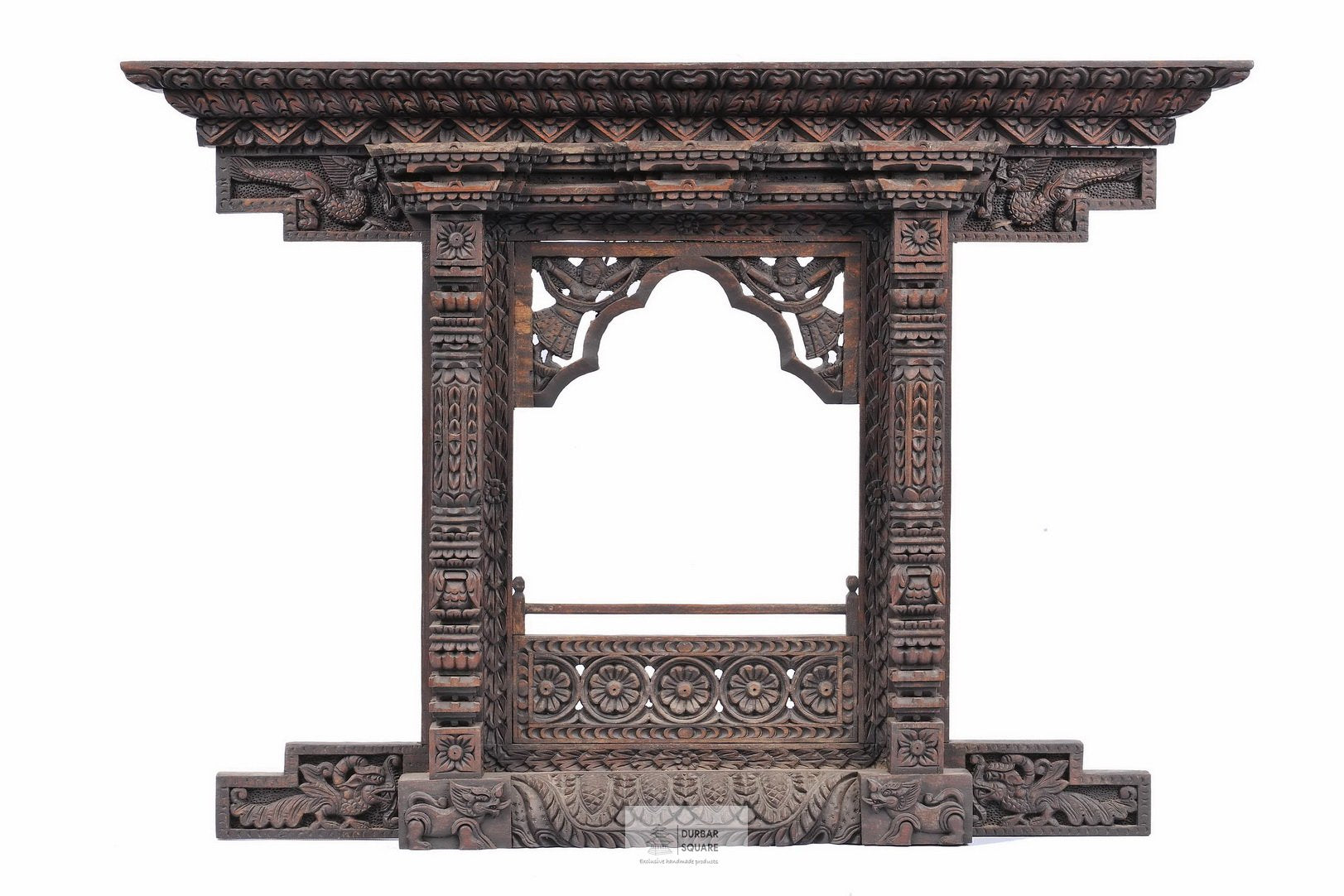
Carved Kumari window - an open-centred frame with a carved arch and floral rosette panel.
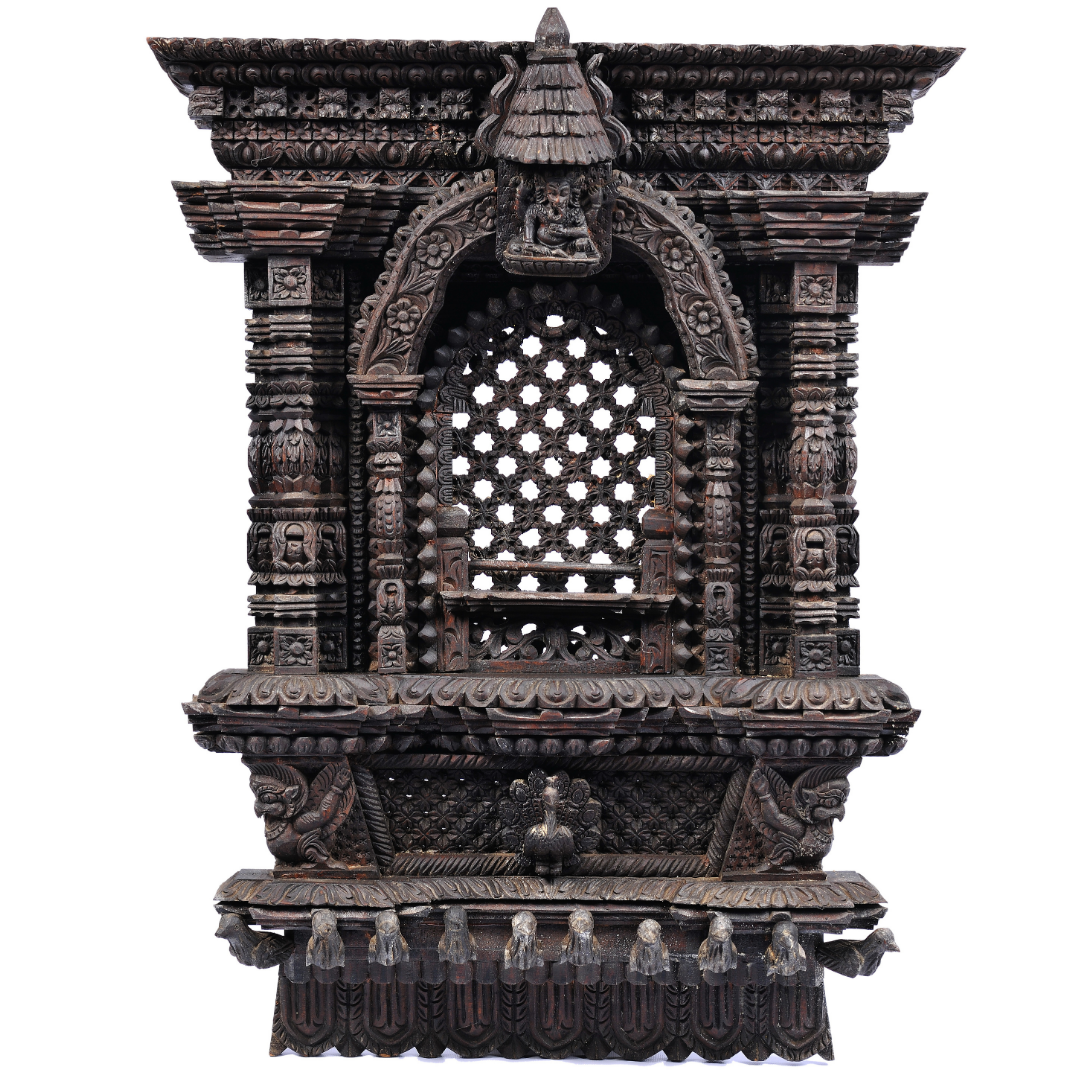
Carved Kumari window with Ganesh - deep, multi-tier carving with a lattice centre and a Ganesh figure at the crown.
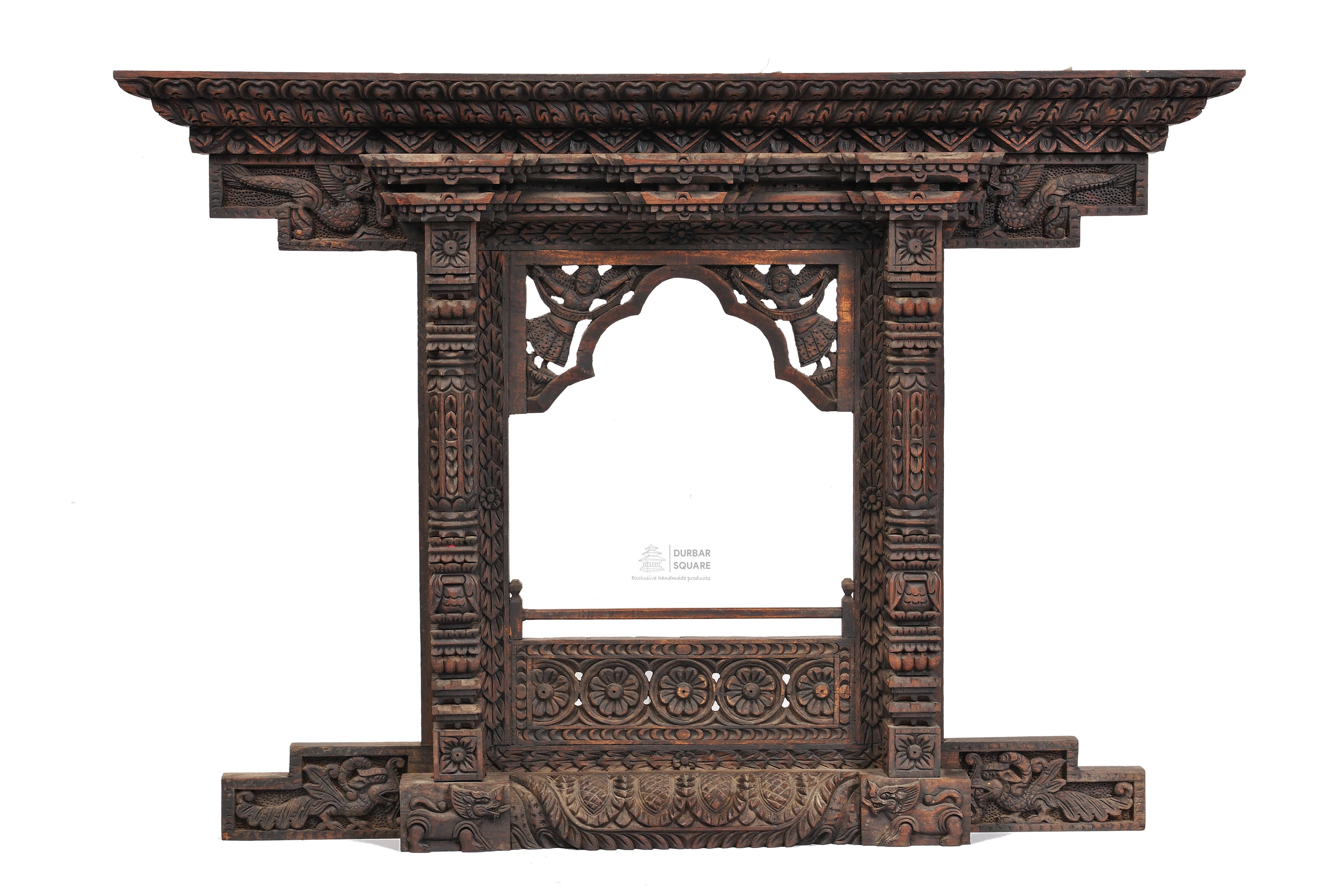
Wooden Kumari carved window - open centre with carved side brackets and a floral lower panel.
See more carved pieces in our home decor and accents collection.