
Ankhi Jhyal: The Story of Nepal's Carved Eye Windows
Walk through the old quarters of Kathmandu, Patan or Bhaktapur and the buildings watch back. The name of Nepal's best-known carved window says as much: as our own product description explains, in Nepali ankhi means eye and jhyal means window. The "eye window" is the face a traditional Newar house turns to the street.
The window that defines Newar architecture
The elaborately carved wooden window is described as the distinguishing feature of traditional Newa architecture and as a symbol of Newar culture and artistry. Such windows are found on palaces, private residences and sacred houses across Nepal Mandala, the historic Kathmandu Valley, and the craft of designing and carving them reached its peak in the mid-18th century (Wikipedia: Newar window, citing the New York Times and Arts of Asia). Traditional Newar houses are usually four storeys of brick, and different types of window are used on each floor according to their function.
The wider craft culture behind these windows is documented too: according to Encyclopaedia Britannica, crafts from wood carving to metallurgy flourished among the Newar between the 10th and 16th centuries, each traditionally the specialty of a particular community.
A vocabulary of windows
Newar architecture has its own window vocabulary, each form with its place and purpose (all four descriptions from Wikipedia: Newar window):
- Sanjhya is the classic Newar window, a projecting bay window usually made of three units at the centre of a facade, its lattice shutter opening upwards.
- Tikijhya is a lattice window and the most common type in traditional architecture. It lets light and air into the room but does not permit a passerby to see inside.
- Gajhya is a projecting window located under a roof.
- Pasukha Jhya is a small window with five units symbolising the Pancha Buddha, the Five Buddhas, and is mostly found on the shrine houses of monasteries.
Some individual windows are famous in their own right. The Desay Madu Jhya in Kathmandu carries a name meaning "the only window of its kind in the country", while Bhaktapur's Mhaykha Jhya, the "peacock window", depicts a fan-tailed peacock (Wikipedia: Newar window).
Built from interlocking wood
A cover story in ECS Nepal magazine describes how these windows are made: the whole structure is built from carved pieces of wood interlocked at different angles, with only a few nails here and there. Designs differ from city to city, the magazine reports, because wealthy patrons once commissioned woodworkers to create unique windows for them. Chandra Bahadur Joshi, an engineer who works to preserve these windows, told ECS Nepal that the skill appears on buildings predating even the Licchavi era, which ECS Nepal describes as a golden age in Nepali history (ECS Nepal: Aankhi Jhyal, Nepali Architectural Excellence).
The same article carries a warning from Jeevan Acharya, a collector and restorer of old Newari windows for over two decades: the skill is dwindling as older artisans pass away and fewer young people take it up. One reading of a carved window hung at home is that it keeps that skill visible and valued. Like all symbolism, it works best as an invitation, not a rule.
Our windows are carved in Nepal today. We do not claim that any single piece descends from that documented history, but it is the craft culture in which Nepali wood carving is still produced.
Carved windows in our collection
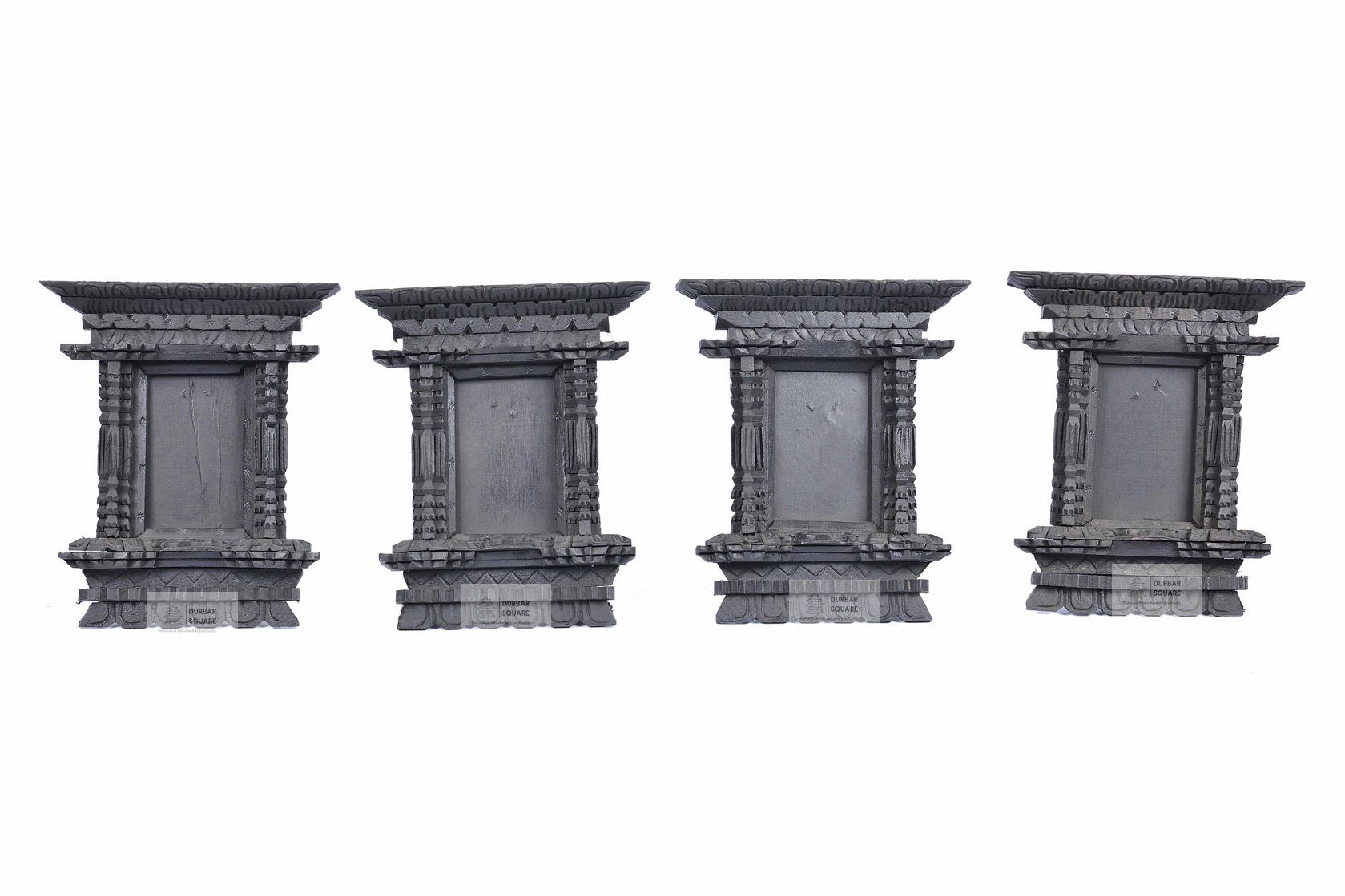
The Ankhi Jhyal Window (set of 3) is sold as a set of three dark, hand-carved wooden window frames in the traditional style; the listing photograph below shows the carving style across four sample frames. As our product description notes, frames like these can be hung as decor or used as photo frames.
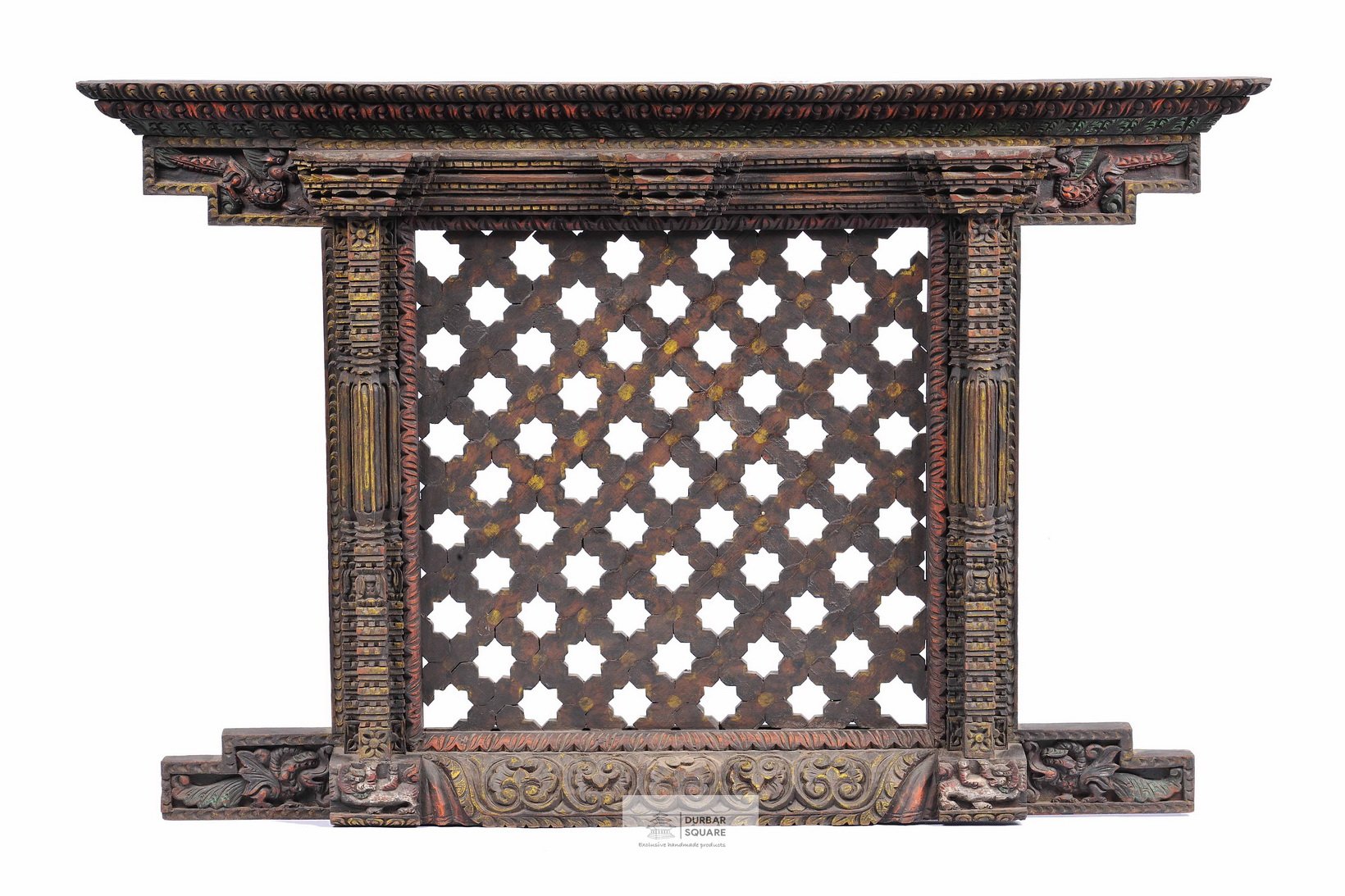
The Ankhi Jhyal Wooden Window is a larger statement piece: a full lattice window with a carved frame and painted detail, the lattice recalling the tikijhya form that lets light through while keeping a room private.
You will find more carved wooden pieces, including window frames, in our decoratives collection.
Sources: Wikipedia: Newar window; ECS Nepal: Aankhi Jhyal, Nepali Architectural Excellence; Encyclopaedia Britannica: Newar. The meaning of the name and the use suggestions are from our own product descriptions.