
How to Choose a Singing Bowl: Size, Metal and Sound
A singing bowl looks simple: a polished metal bowl, a cushion, a wooden mallet. Yet the details behind a good bowl - what it is made of, how it is shaped, how it is played - are anything but simple. This guide walks through what to look for, with the honest caveat that much of what is repeated about singing bowls is modern invention rather than ancient tradition.
What a singing bowl actually is
Wikipedia classifies the singing bowl as a "standing bell" or "resting bell": an inverted bell supported from below with the rim uppermost. Such bells are normally bowl-shaped and exist in a wide range of sizes, from a few centimetres to a metre in diameter. They are often played by striking, but some - known as singing bowls - can also be played by rotating a suede-covered mallet around the outside rim to produce a sustained musical note. Struck bowls are used in some Buddhist religious practices to accompany periods of meditation and chanting, and the bowls are widely used today for music making, meditation and relaxation.
Metal: what the bowl is made of
According to Wikipedia, most standing bells are manufactured substantially of bell metal - an alloy of copper and tin - sometimes with impurities or additions. You may read that singing bowls are "traditionally" made of seven metals, each linked to a heavenly body. Wikipedia presents this as a claim that is "sometimes stated", not as documented fact: it cites a 1996 Concordia University analysis of two bowls, which found them to be essentially bell metal, with small quantities of other metals consistent with impurities, and no gold or mercury within the accuracy of the instruments. A similar note of caution applies to stories of meteoritic iron.
The usual manufacturing technique for standing bells was to cast the molten metal and then hand-hammer it into shape. Modern bowls may be made that way or shaped by machine-lathing, Wikipedia notes, and the finished bowl is sometimes decorated with an inscription such as a message of goodwill, or with motifs such as rings, stars, dots or leaves.
Size, weight and how you will play it
Because standing bells range from a few centimetres across to a full metre, the first practical question is how you intend to use the bowl. A bowl you hold in your palm while playing needs to sit comfortably in your hand; a bowl that will rest on its cushion can be larger and heavier. The bowls shown in this guide are photographed with their cushions and strikers, so you can see what each one comes with before you order.
Decoration: plain, Om, mantra and lotus
Some bowls are left plain, showing the hammered surface of the metal itself. Others carry etched or carved decoration. In our collection you can see both: a polished plain brass bowl; a dark bowl etched with panels of the Om symbol; and a carved bowl with mantra lettering around the body and a lotus design worked into the interior. The product photographs show each bowl as listed.
An honest word about history
As we explored in our honest history of the so-called Tibetan bowl, Wikipedia believes the manufacture and use of bowls specifically for "singing" to be a modern phenomenon: bowls capable of singing began to be imported to the West from around the early 1970s. That does not make a singing bowl any less beautiful or less skillfully made - it simply means the story should be told honestly.
Singing bowls in our collection
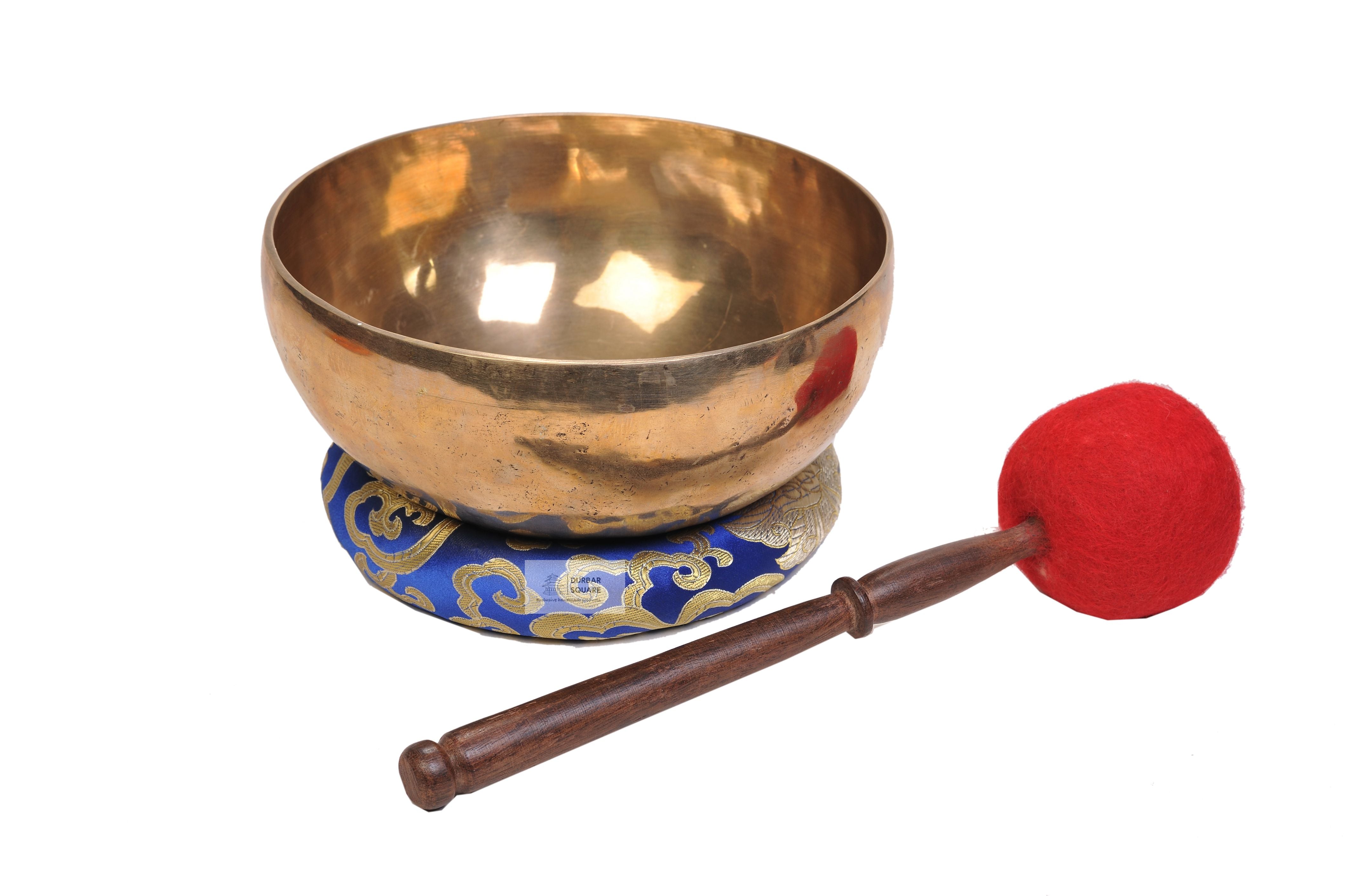
Plain brass singing bowl - the hammered metal left undecorated, with cushion and mallet.
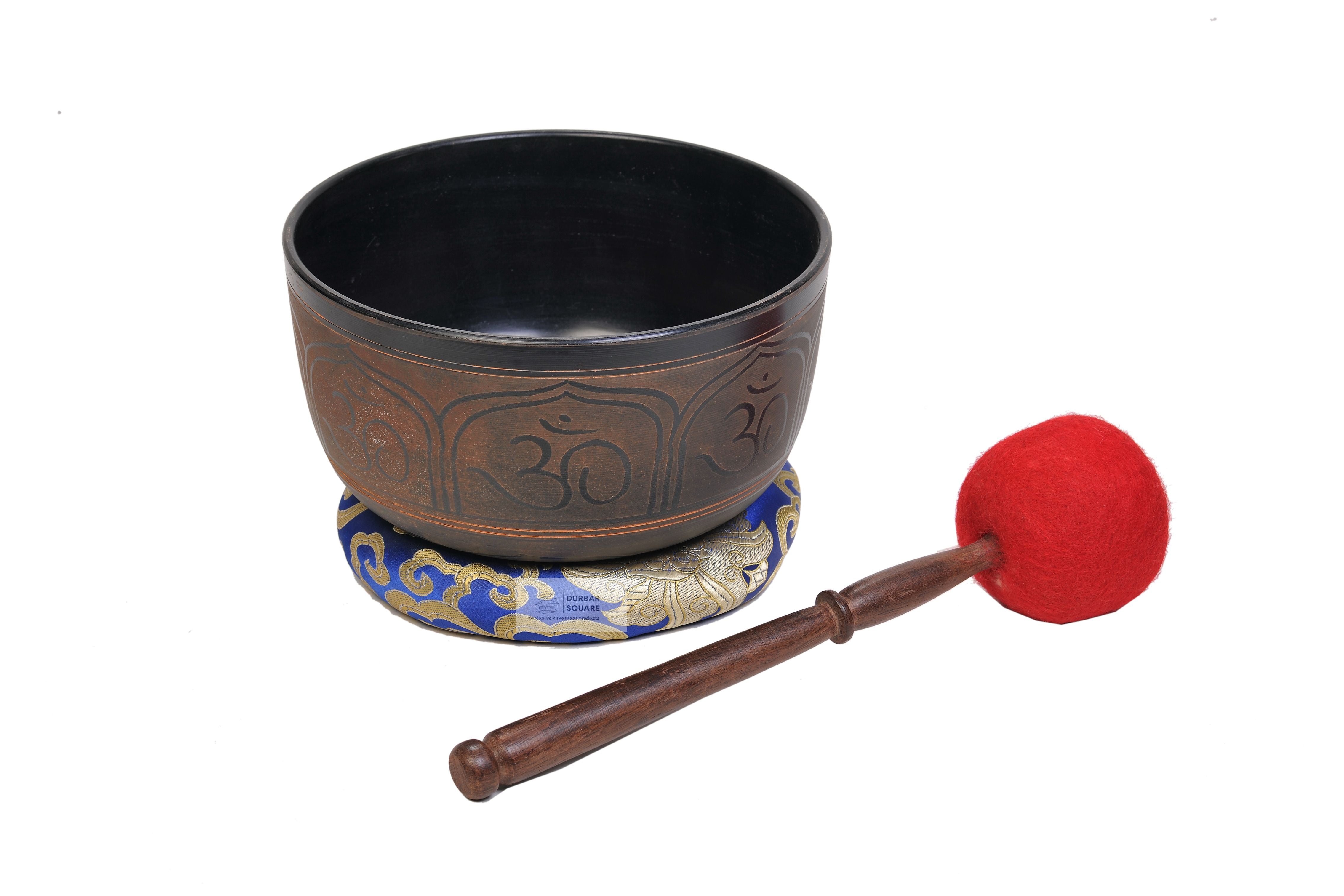
Om carved singing bowl - etched with the Om symbol in panels around the body.
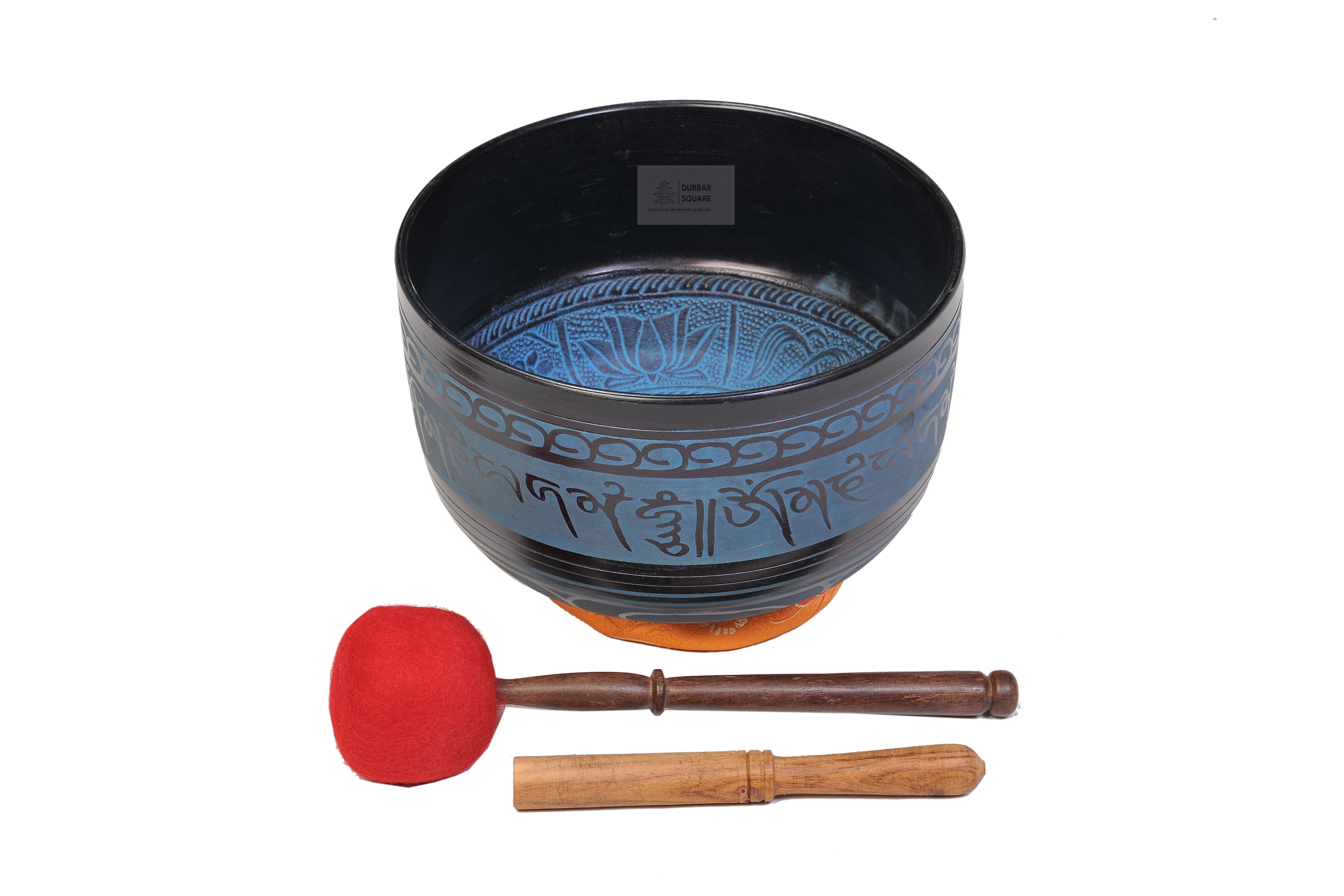
Carved metal singing bowl - mantra lettering outside, a lotus worked into the interior, two strikers included.
Browse the full range in our singing bowls and bells collection.