
How to Choose a Vajra (Dorje): A Buyer's Guide
If you are looking to buy a vajra (dorje in Tibetan), the choices can be confusing at first: single or double, brass, copper or plated. This guide walks through what the form means and what actually changes from one piece to the next, so you can choose with understanding rather than guesswork.
What a vajra is
Wikipedia describes the vajra as a legendary and ritualistic tool that pairs two symbols: the diamond, standing for indestructibility, and the thunderbolt, standing for irresistible force. Across Hinduism, Buddhism and Jainism, it represents firmness of spirit and spiritual power. In Hindu mythology it is the weapon of Indra, the Vedic king of the devas. In Buddhism, the vajra is the symbol of Vajrayana, one of the three major schools of Buddhism and the one most identified with Tibetan Buddhism; Vajrayana is translated as "Thunderbolt Way" or "Diamond Way".
Reading the form
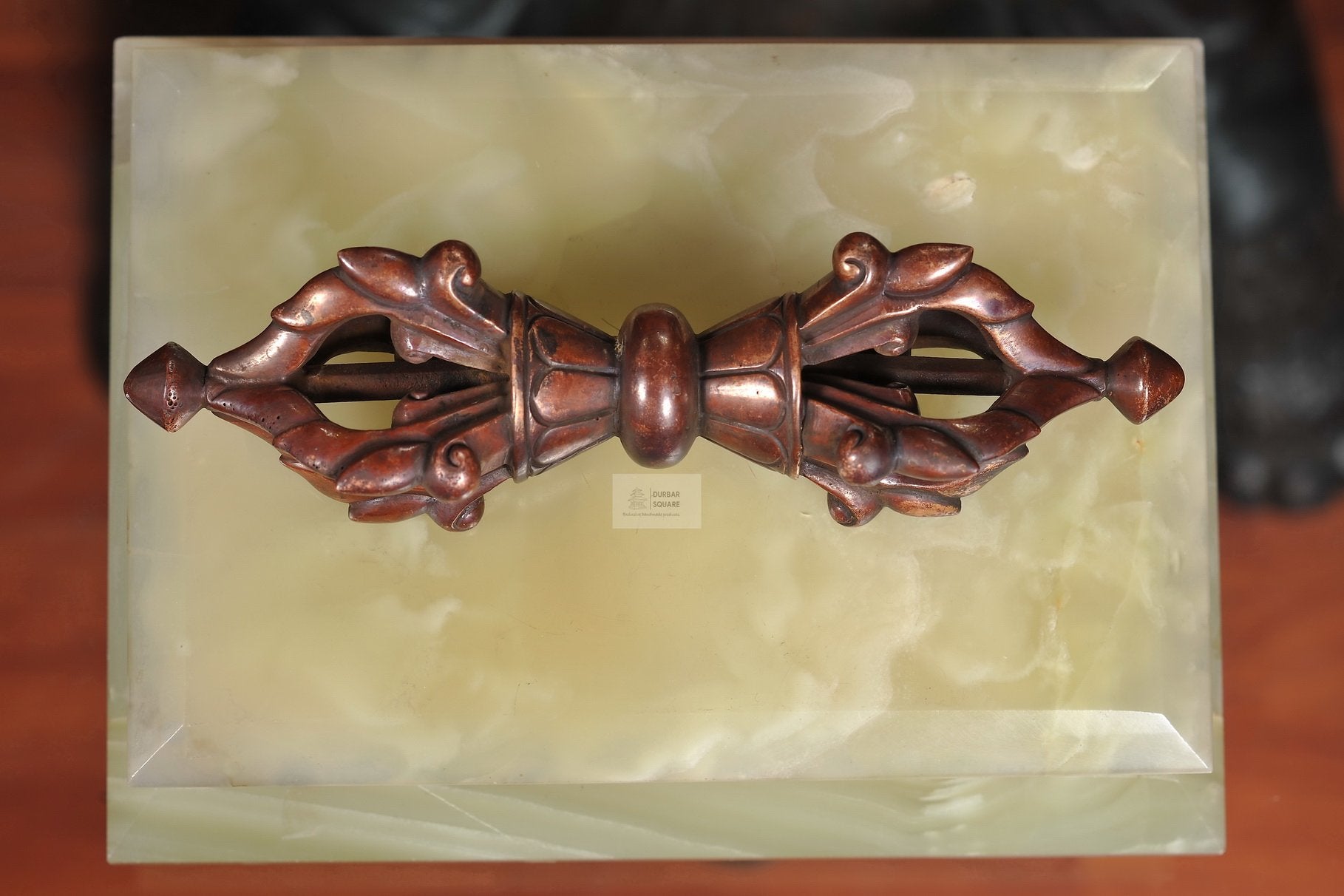
Physically, Wikipedia explains, the vajra is a symmetrical scepter: a central sphere with sets of prongs that arc out from lotus blooms on either side. The details are meaningful. The sphere in the center represents shunyata, the primordial unity of all things. The two eight-petaled lotus flowers represent the phenomenal world (samsara) and the noumenal world (nirvana). Wikipedia notes that the five-pronged vajra is the most commonly seen form, built from four outer prongs plus a central one, and describes an elaborate system of correspondences between the five "poisons", the mental states that obscure the mind, and the five wisdoms of the enlightened mind, each wisdom associated with a Buddha figure.
Single or double vajra?
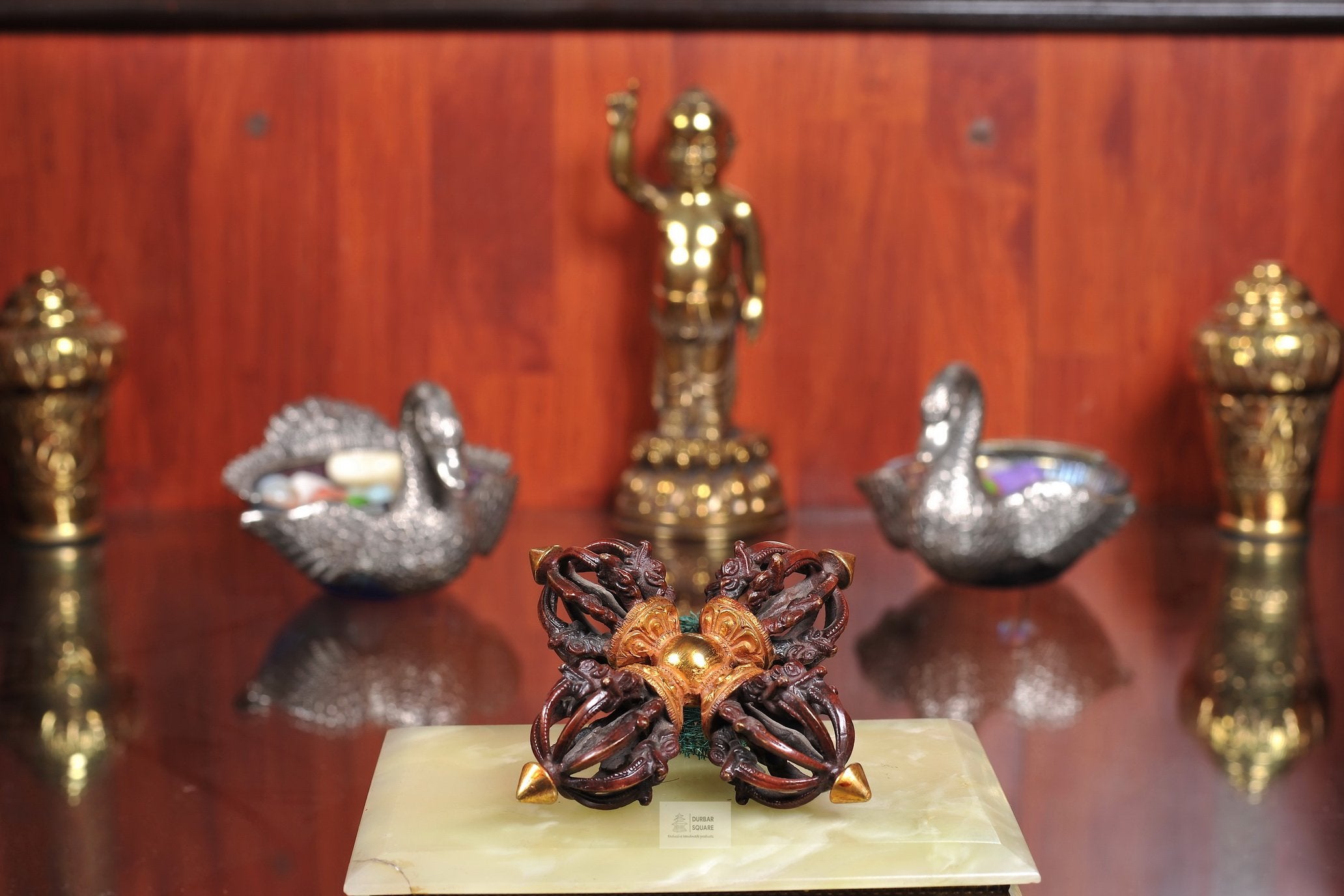
What is a double vajra? Our own description of the store's Bishwa Bajra explains the form: two vajras crossed together, with four vajra heads sitting at the cardinal points of a central hub. Wikipedia independently notes that a double vajra appears in the national emblem of Bhutan. The store stocks both single and double forms; the double vajra's listing photo shows it displayed on a marble stand.
The vajra and the bell
The vajra has a traditional partner. Wikipedia records that the use of a bell (ghanta) and vajra together as symbolic and ritual tools is found in all schools of Tibetan Buddhism: the vajra represents upaya, skillful means, while the bell denotes prajna, wisdom, and together they represent the inseparability of wisdom and compassion. In iconography, Vajrasattva holds the vajra in his right hand and a bell in his left. If you want the traditional pairing, our singing bowls and bells collection includes bells.
Materials and price
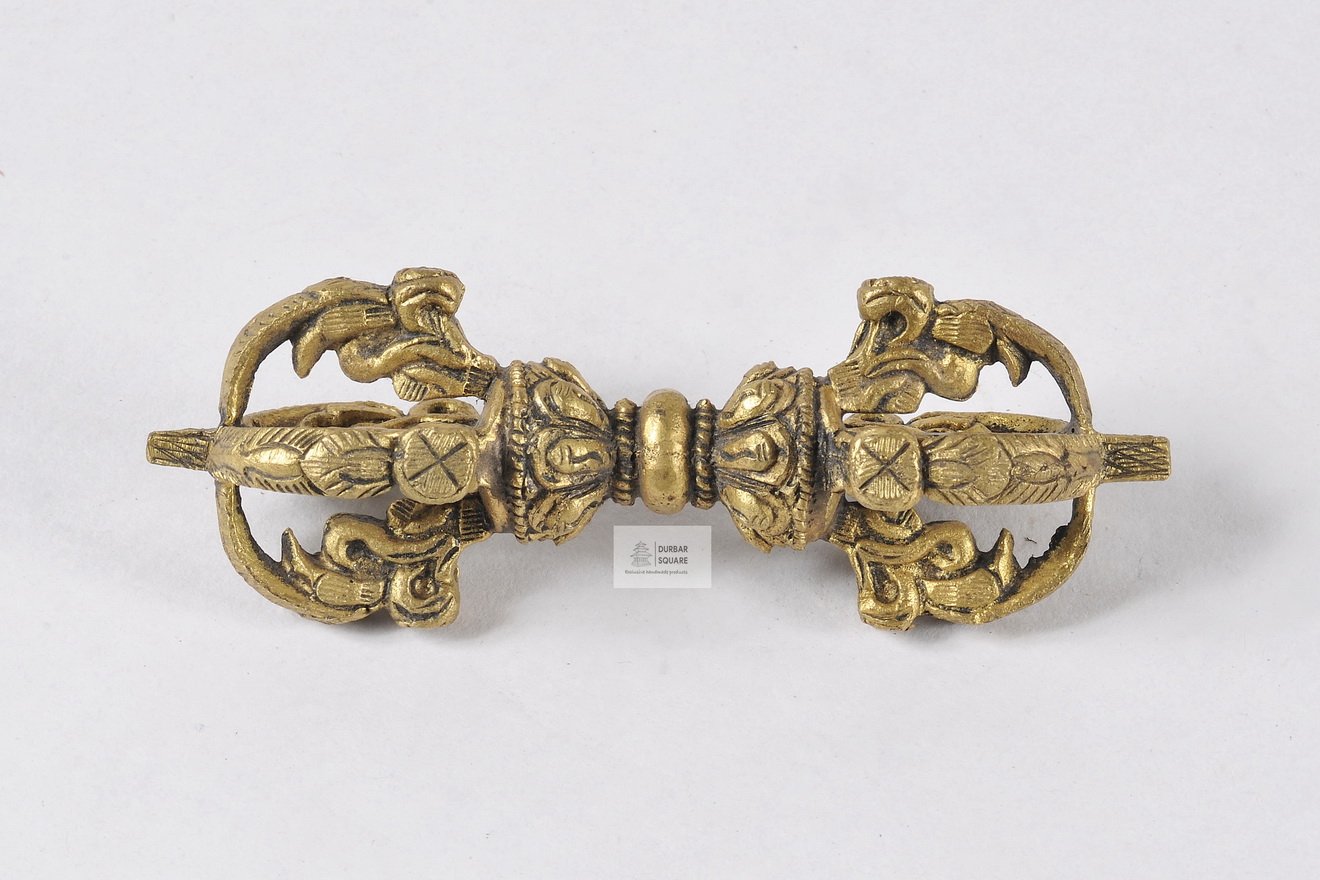
In our own catalog the material is the clearest guide to price within a form. For the classic single vajra, a handcrafted Brass Vajra starts at $109, a Copper Vajra is $178, and silver-plated copper versions run from $171 to $205. The double vajra is a different form, not another finish: the store's Gold plated Copper Vajra, the Bishwa Bajra pictured below, is $151.
Handcrafted vajras at Durbar Square
The vajras featured here are listed as handcrafted. The Gold plated Copper Vajra ($151) is a double vajra, the Bishwa Bajra form described above, and its listing photo shows the four crossed prong heads clearly.
You can browse these vajras and other handcrafted pieces in our home decor and accents collection.