
Sitatapatra: The White Umbrella Goddess of Buddhist Protection
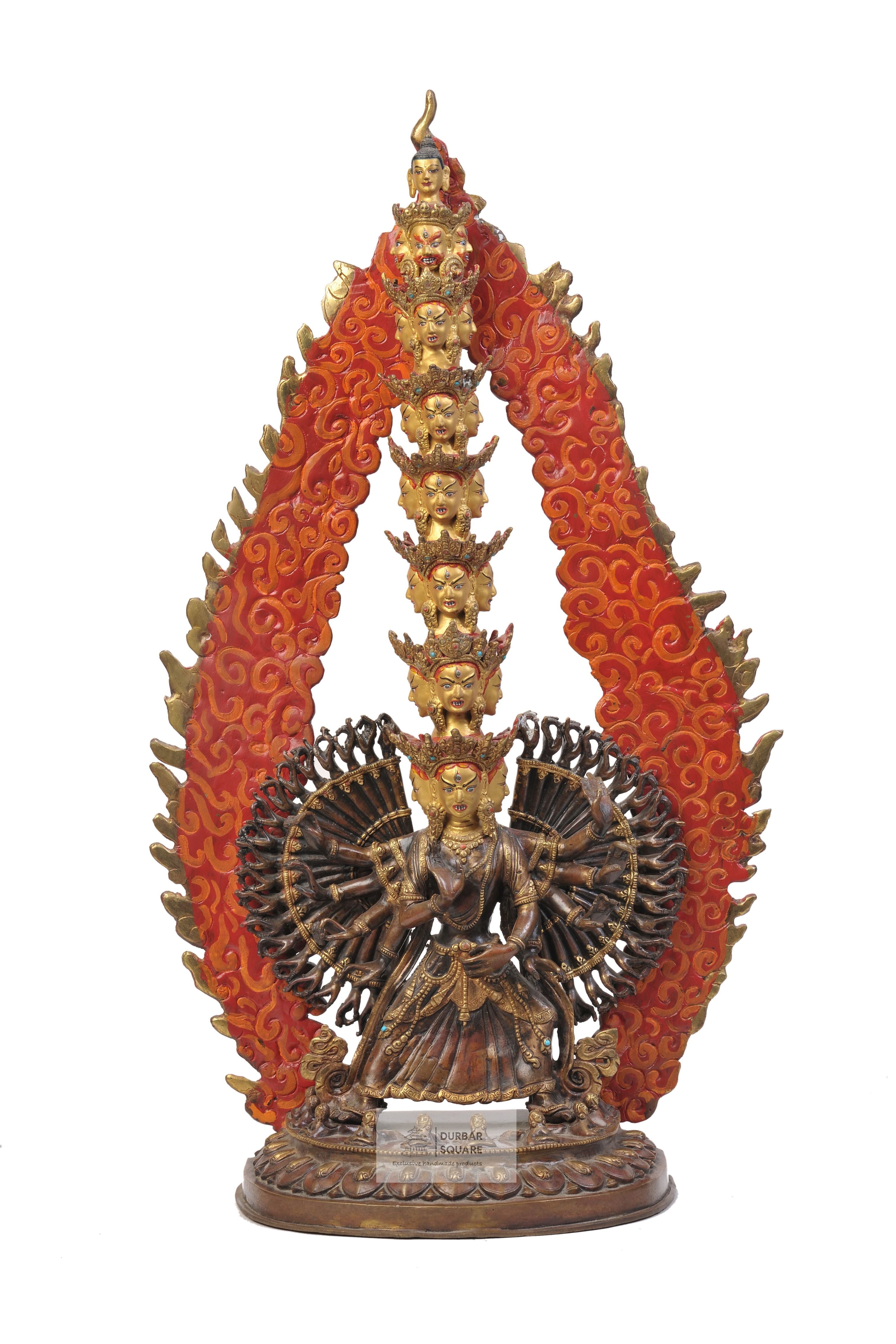
Sitatapatra - whose Sanskrit name Wikipedia glosses as "White Parasol", from sita ("white") and atapatra ("parasol" or "umbrella") - is described by Wikipedia as a bodhisattva and protector against supernatural danger in Buddhism, venerated in both the Mahayana and Vajrayana traditions. She is also known as Usnisasitatapatra, a name that ties her to the Buddha's ushnisha, the crown protuberance from which, Wikipedia records the belief, she was emanated by Gautama Buddha. The Durbar Square range includes a gold-plated statue of her.
Born from the Buddha's crown
Wikipedia, drawing on Miranda Shaw's Buddhist Goddesses of India, recounts that Sitatapatra emerged from the Buddha's ushnisha while he was in the Trayastrimsa heaven, and that the Buddha announced her role to "cut asunder completely all malignant demons, to cut asunder all the spells of others... to turn aside all enemies and dangers and hatred." Shaw's description, as Wikipedia quotes it, warns against reading her beauty as mildness: she is a "fierce, terrifying goddess, garlanded by flames, a pulverizer of enemies and demons."
One goddess, many forms
Wikipedia lists a striking range of forms for Sitatapatra, citing Himalayan Art Resources: with one face and two arms; with three faces and six, eight or ten arms; with five faces and ten arms; and, at the far end, with a thousand faces, a thousand arms and a thousand legs. In the Mahayana Sitatapatra Sutra, Wikipedia notes, she is called Aparajita, "Undefeatable, Unconquerable".
Mantra and practice
Wikipedia gives her mantra as "Hum ma ma hum ni svaha", and notes that the Shurangama Mantra of the Shurangama Sutra is the most commonly practiced mantra invoking her. Lama Zopa Rinpoche, as cited by Wikipedia, describes the "Great White Umbrella" sadhana as a practice for dispelling interferences and spirit possession, quelling disasters and bringing auspiciousness, and Wikipedia adds that full Vajrayana practice calls for a kriya-tantra abhisheka of Sitatapatra.
The Sitatapatra at Durbar Square
The Gold Plated Sitatapatra Statue ($2,203) shows one of her elaborate many-armed forms: she stands on a lotus base, her arms fanning out in two circular arrays, with a rising tower of faces above her crowned head and a tall red-orange flaming mandorla behind - very much Shaw's "garlanded by flames". The listing presents the piece as handcrafted copper, fully gold plated, and describes her as a protector against supernatural danger venerated in the Mahayana and Vajrayana traditions, matching the account Wikipedia gives.
Sources
- Wikipedia: Sitatapatra (name, origin from the Buddha's ushnisha, forms, mantra and practice, Miranda Shaw quotations)
- Durbar Square product listing (materials, technique and price)