
Sankha: The Sacred Conch, from Vishnu's Emblem to the Eight Auspicious Symbols
Few objects sound as old as the conch. Long before it was an ornament, the spiral shell of a large sea snail was a trumpet, and in the Hindu and Buddhist worlds it became a defining ritual object. This is what the sankha (also written shankha) means, and where the carved conches in our collection fit in.
Vishnu's emblem, and a working trumpet
A shankha is, simply, the Sanskrit word for conch, and it carries genuine ritual importance in Hinduism. The shankha called panchajanya is a sacred emblem of the preserver deity Vishnu; it is still blown as a trumpet in Hindu ritual today, and in earlier centuries it served as a war trumpet (Wikipedia: Shankha). London's Horniman Museum notes the same double life: the shankha has importance in Hinduism as a trumpet and an emblem of Vishnu, and in Buddhism it is one of the eight auspicious symbols (Horniman Museum: Fact file, Conch shell).
The trumpet is made by drilling a hole near the tip of the shell's apex; blown through, it produces the loud, carrying sound that once summoned allies in battle. Today the shankha is blown during worship in Hindu temples and homes, especially at aarti, when light is offered to the deities, and it is used to bathe images of deities, particularly Vishnu, and in ritual purification (Wikipedia: Shankha).
One of the eight auspicious symbols
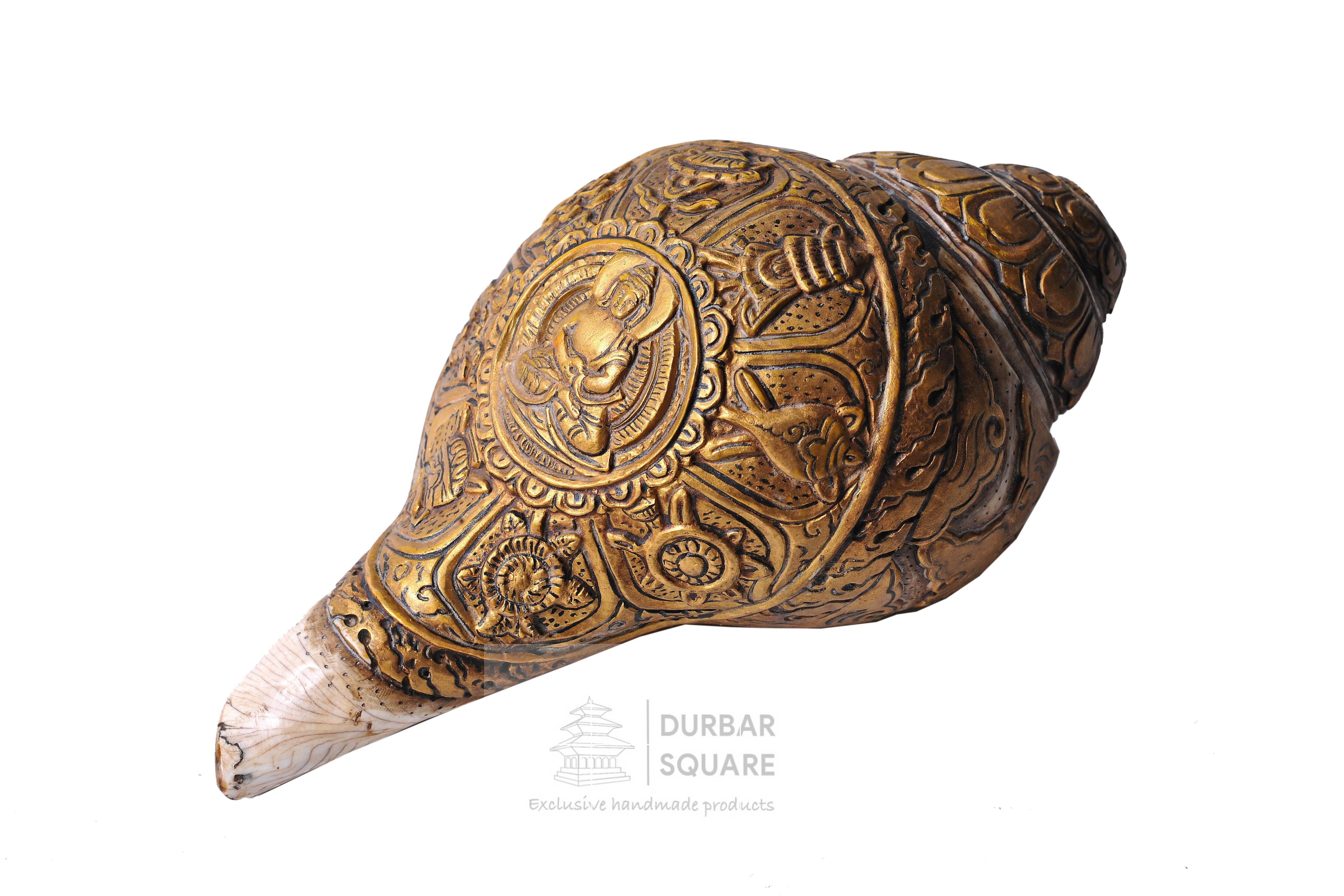
In Buddhism the conch takes a second role: it is one of the Ashtamangala, the eight auspicious symbols. The standard list runs: parasol, pair of golden fish, conch, treasure vase, lotus, endless knot, victory banner and wheel; Nepalese Buddhists replace the wheel with a fly-whisk, the chamaru (Wikipedia: Ashtamangala). Our own product description for the engraved conch below lists that Nepali set as it appears on the piece: white parasol, two fishes, sankha, dhwaja, srivatsa, kalasa, padma and chamaru. One reading of a conch engraved with all eight symbols is that it carries the whole set in a single object. Like all symbolism, it works best as an invitation, not a rule.
The carved conches in our collection are made in Nepal today.
Carved conches in our collection
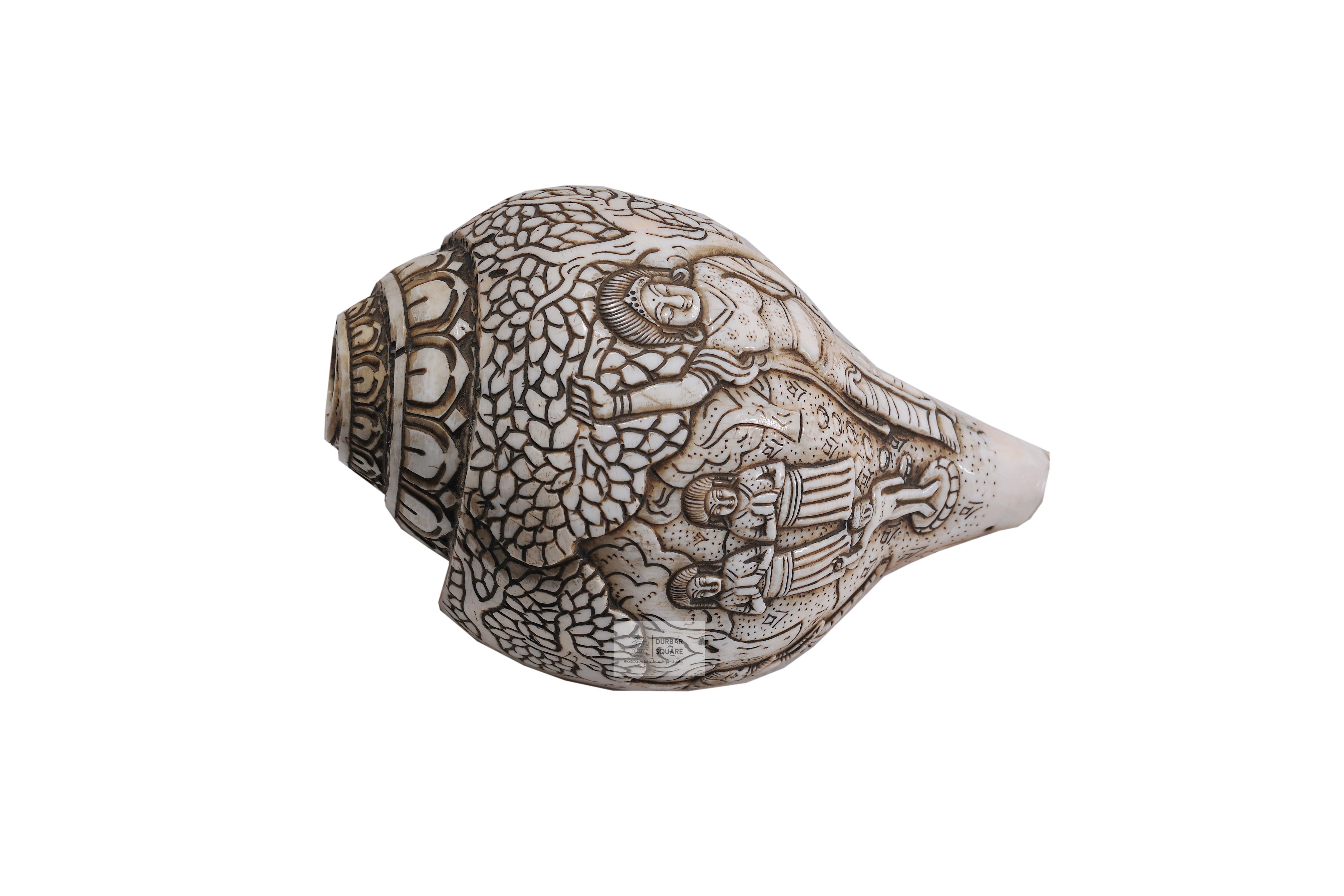
The Carved Sankha (Conch Shell) is a natural conch hand-carved in relief with figures from the Hindu tradition. As our product description notes, the shankha is a sacred emblem of Vishnu, and a piece like this makes a distinctive gift for a collector of antique-style objects.
The Ashtamangal and Buddha Engraved Conch Shell is a gold-plated conch engraved with a Buddha medallion and the eight auspicious symbols, the natural shell tip left visible.
You will find more engraved conches in our decoratives collection.
Sources: Wikipedia: Shankha; Wikipedia: Ashtamangala; Horniman Museum and Gardens: Fact file, Conch shell. The list of the eight symbols and the Vishnu emblem note are from our own product descriptions.