
Nepalese Symbols: Ashtamangala, Om and the Endless Knot Explained
Look at Nepali handicrafts - a singing bowl, a pair of cymbals, a carved pot - and certain small emblems keep recurring: a knotted weave, a lotus, a conch, the syllable Om. These are not decoration chosen at random. They belong to a shared symbolic vocabulary of Himalayan faiths, and here is what the main ones mean, with the sources to check.
The eight auspicious symbols
The set known as the Ashtamangala is the sacred group of Eight Auspicious Signs common to Hinduism, Jainism and Buddhism, with many cultural enumerations and variations (Wikipedia: Ashtamangala). A painting in the Rubin Museum's collection shows how the standard set reads: a form of the goddess Tara with eight arms holds the endless knot, pair of golden fish, treasure vase and parasol in her left hands, and the wheel, lotus, conch and victory banner in her right (Rubin Museum: An Auspicious Painting).
Nepal has its own twist on the list: in the Nepalese Buddhist set of the eight, the Wheel of Law is not used among the symbols; in its place a fly-whisk may appear, made of a yak's tail attached to a silver staff and used in ritual recitation and during the fanning of deities in puja (Wikipedia: Ashtamangala). Our own product descriptions add the tradition that the eight represent the gifts offered by celestial beings to Shakyamuni Buddha on his attainment of enlightenment.
Om, and the mantra that follows it
Om is a sacred sound, seed syllable and invocation across Buddhism, Hinduism, Jainism and Sikhism, and Wikipedia describes its written form as the most important symbol in Hinduism. In Tibetan Buddhism, Om is often placed at the beginning of mantras - Wikipedia calls Om mani padme hum, the six-syllable mantra of Avalokiteshvara, the Bodhisattva of compassion, probably the most well known.
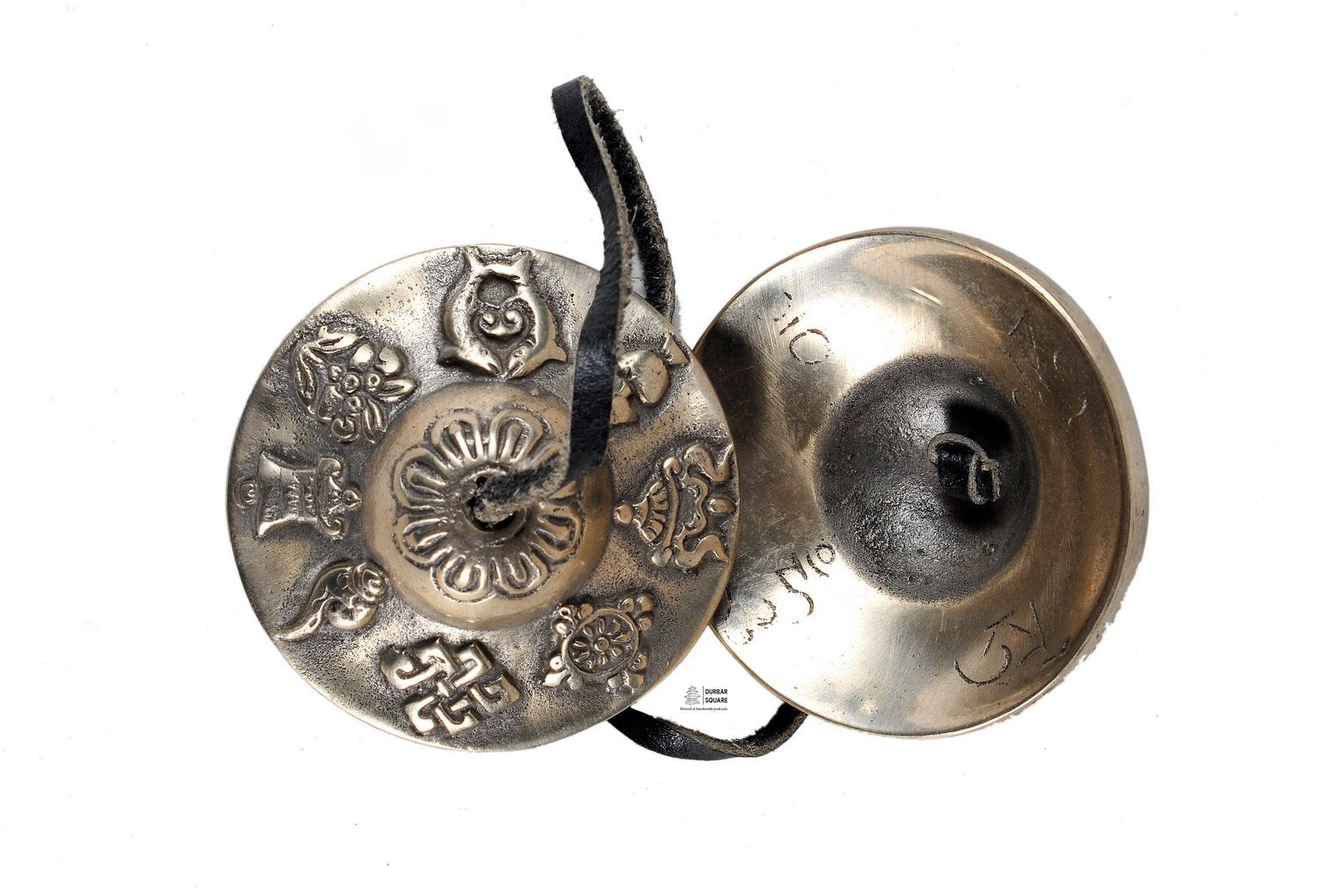
Small bronze cymbals called tingshya, struck together for a pure, bright ring, can carry these symbols too - the pair in our collection is engraved with the Ashtamangala. As our product description notes, tingshya are often used in meditation practices to help focus the mind, or to add depth to musical soundscapes.
Symbols in our collection
The Ashtamangala Engraved Tingshya Bells are handcrafted bronze cymbals joined by a leather strap, one face engraved with the eight auspicious symbols around a central boss.
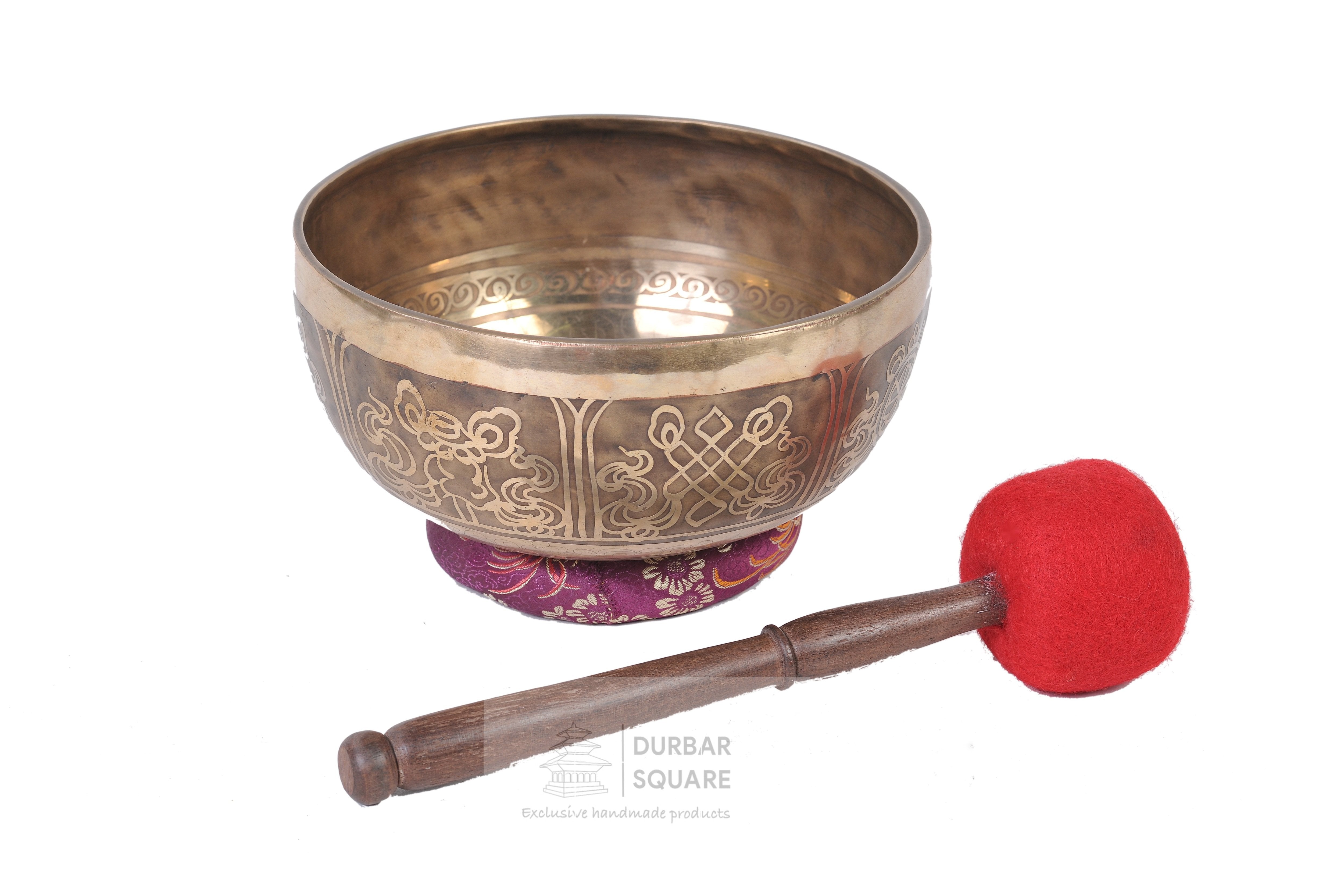
The Endless Knot Singing Bowl carries the knot around its outer wall, and comes with a cushion and mallet. Our product description reads the endless knot as a symbol of the ultimate unity of everything and of the intertwining of wisdom and compassion.
You will find more engraved pieces in our singing bowls collection.
Sources: Wikipedia: Ashtamangala; Rubin Museum: An Auspicious Painting; Wikipedia: Om. The enlightenment-gifts tradition and the uses of tingshya are from our own product descriptions.