
Tibetan Silver Daggers: Craft and Symbolism of the Himalayas
A dagger in Tibet could be more than a blade. The Powerhouse Museum describes a type of small sheathed personal dagger made especially in the Kham region and used by horsemen, traders and militia or escorts as a utility object that also carried protective or devotional significance (Powerhouse Museum: Tibetan dagger and sheath). The silver daggers in our collection are ornate covered daggers worked in silver and inlaid with turquoise and coral.
Ornament with meaning
The Powerhouse Museum describes Tibetan daggers as traditionally ornate: they may feature a sleeping spirit face on one side and an angry spirit face on the other, with the most significant examples carrying three spirit faces. It also calls coral and turquoise together a classic Tibetan pairing symbolising life force and protection (Powerhouse Museum: Tibetan dagger and sheath).
The decoration could also be explicitly Buddhist. An 18th to 19th century Tibetan dagger with sheath in the Metropolitan Museum of Art has a hilt and scabbard decorated with the Eight Auspicious Symbols, including the parasol, the conch shell, the endless knot and the wheel of law, with another emblem, the wish-granting jewel, shown on the pommel and the grip (The Metropolitan Museum of Art: Dagger with Sheath).
Not the same as a phurbu
Not every Tibetan dagger was made for cutting. The Powerhouse Museum describes the phurbu or phurpa as a three-sided "magic dagger" used in Tibetan Buddhist rituals to conquer evil spirits and obstacles, or kept as a yantra to store personal power. The word phurpa is used primarily in Central Tibet, while phurbu is used more often in Kham, Amdo and Ladakh. The museum's own example has a single flat blade, which it reads as a design based on the traditional phurbu but modified for use as both a ritual object and a knife (Powerhouse Museum: Tibetan dagger and sheath). The daggers in our collection are ornate covered daggers: their interest lies in the metalwork of sheath, grip and pommel rather than in ritual use.
Silver daggers in our collection
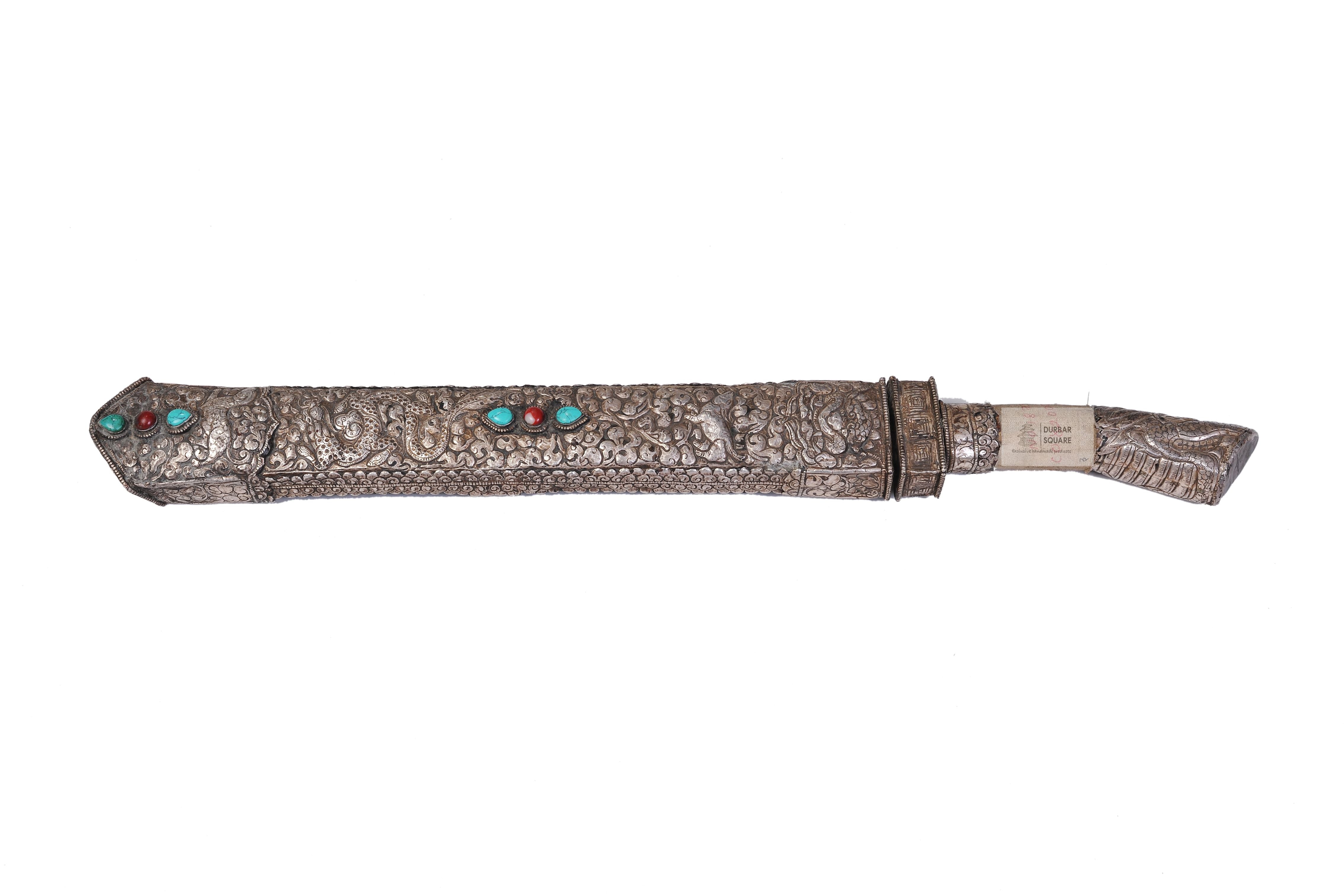
The Silver Dagger is, as our product description notes, a handmade Tibetan silver-covered dagger with turquoise and coral stones. The sheath, grip and pommel are chiselled from gilt-silver in a fine pierced openwork technique, which the description identifies as derge, after the Tibetan province where the style is said to have originated; the openwork incorporates intertwined dragons and a garuda-like face among its motifs.
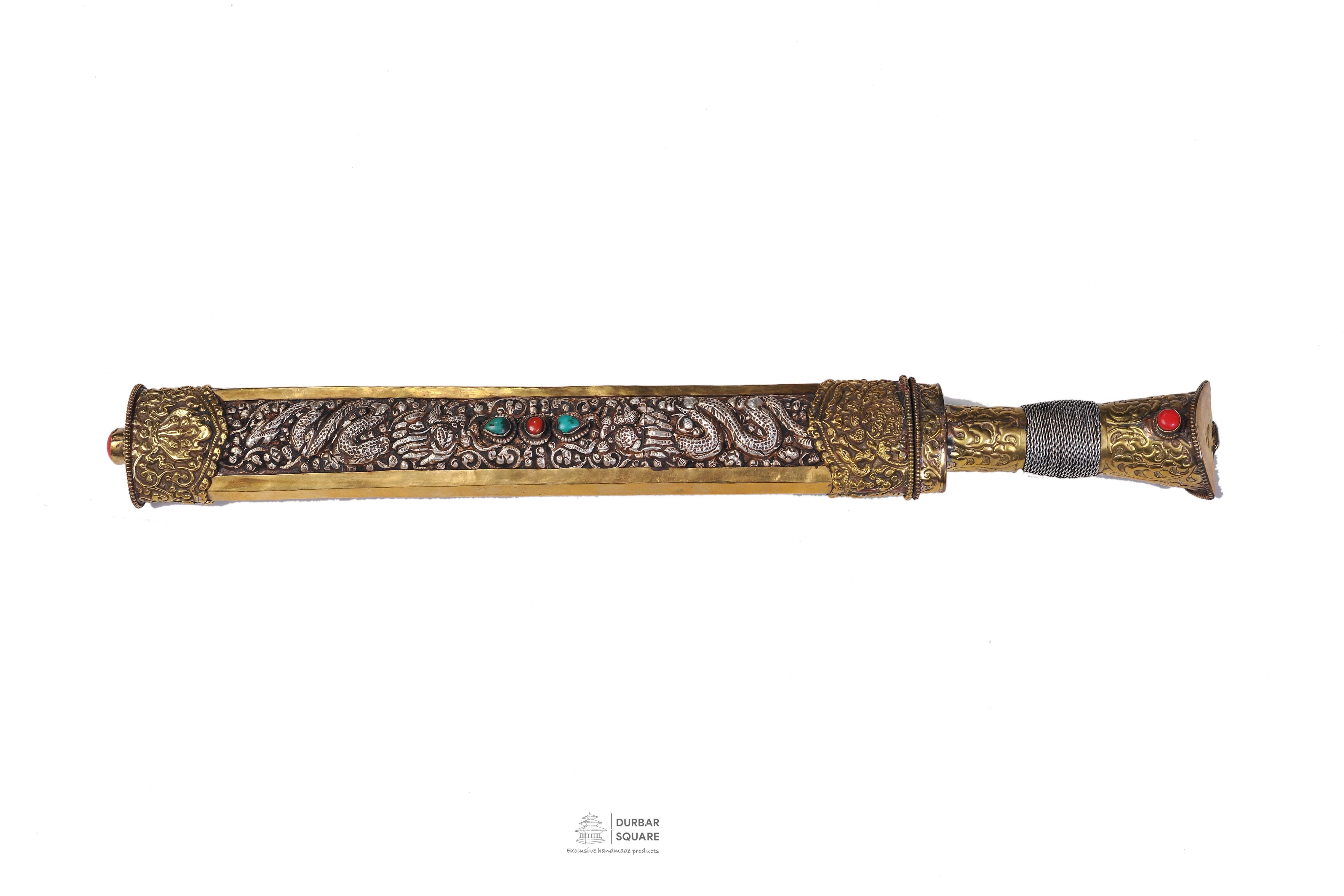
The Silver and Gold Plated Dagger works the same family of motifs in a two-tone finish, with gold-plated fittings set against the pierced silver openwork and a wire-wrapped grip.
Sources: Powerhouse Museum: Tibetan dagger and sheath; The Metropolitan Museum of Art: Dagger with Sheath, Tibetan, 18th-19th century. The description of the derge openwork and the dragon and garuda motifs is from our own product descriptions.