
Vessels of Meaning: Kamandalu, Surahi and the Sacred Water Pots of the Himalayas
Some water vessels carry meanings well beyond their use. The ascetic's kamandalu, the ceremonial kalash and Nepal's surahi jug have all moved between ritual and daily life in South Asia, and handcrafted examples of each are part of our collection.
Water in worship
Encyclopaedia Britannica describes Hindu puja, or ceremonial worship, as treating the deity with the honors of a royal guest, including the ritual bathing of its image. Water runs through the rite, and the vessels that hold and pour it take on a role of their own.
The kamandalu: the ascetic's companion
The kamandalu is a small vessel for carrying water for drinking and ritual ablutions. According to IMPART, a reference on premodern South Asian art, it has been used since antiquity by Hindu, Jain and Buddhist ascetics, with early forms made from clay, dried gourds or coconut shells, and later ones from wood, brass and copper. It is associated with austerity and spiritual discipline: it appears with deities shown in ascetic form such as Brahma and Shiva, the bodhisattva Avalokiteshvara is often depicted holding one, and Jain monastic authorities count it among the few possessions a monk may keep.
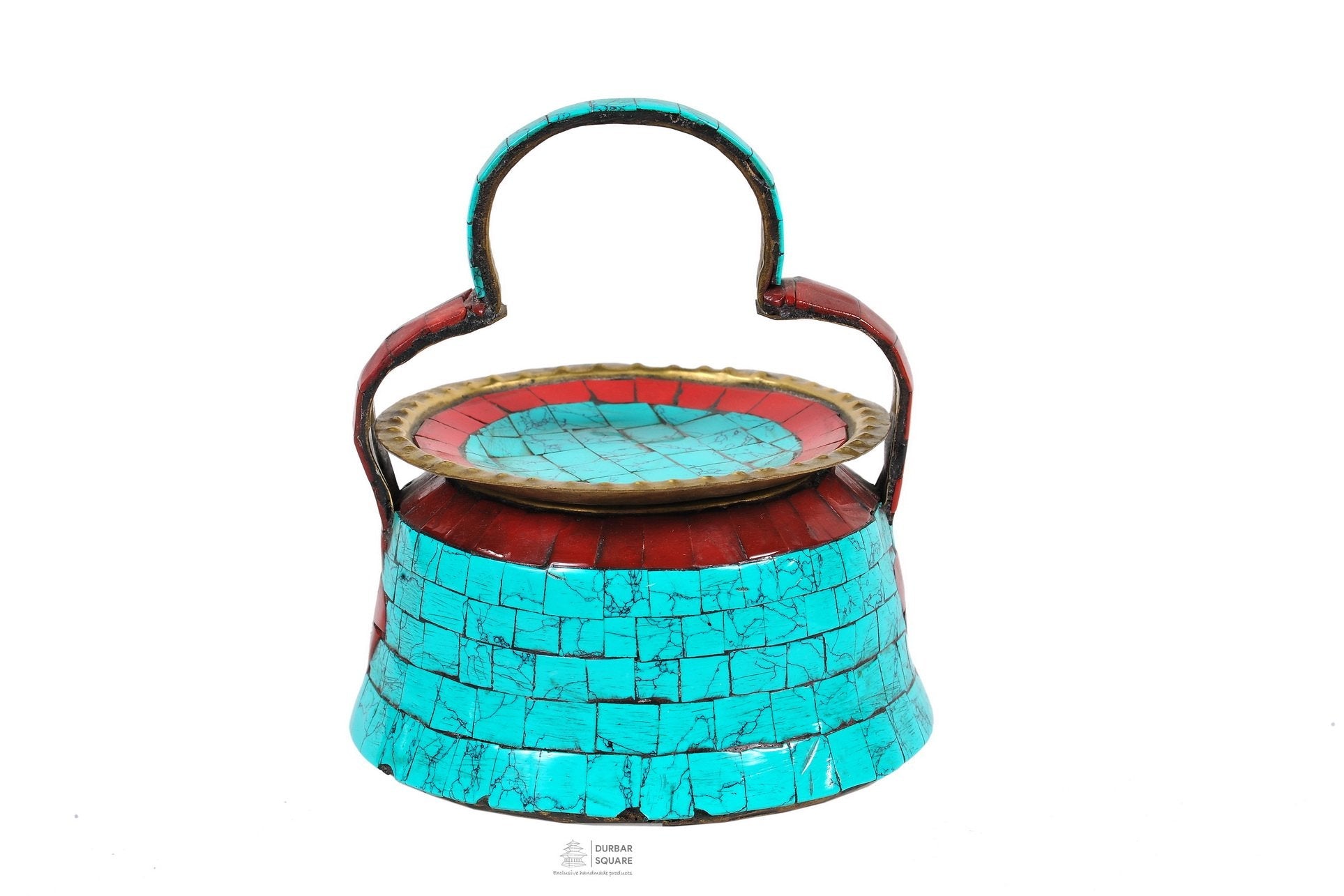
Our Kamandalu Pot is handcrafted in bronze and set with colored Tibetan stones, a decorative take on the ascetic's plain pot.
The kalash: the pot of abundance
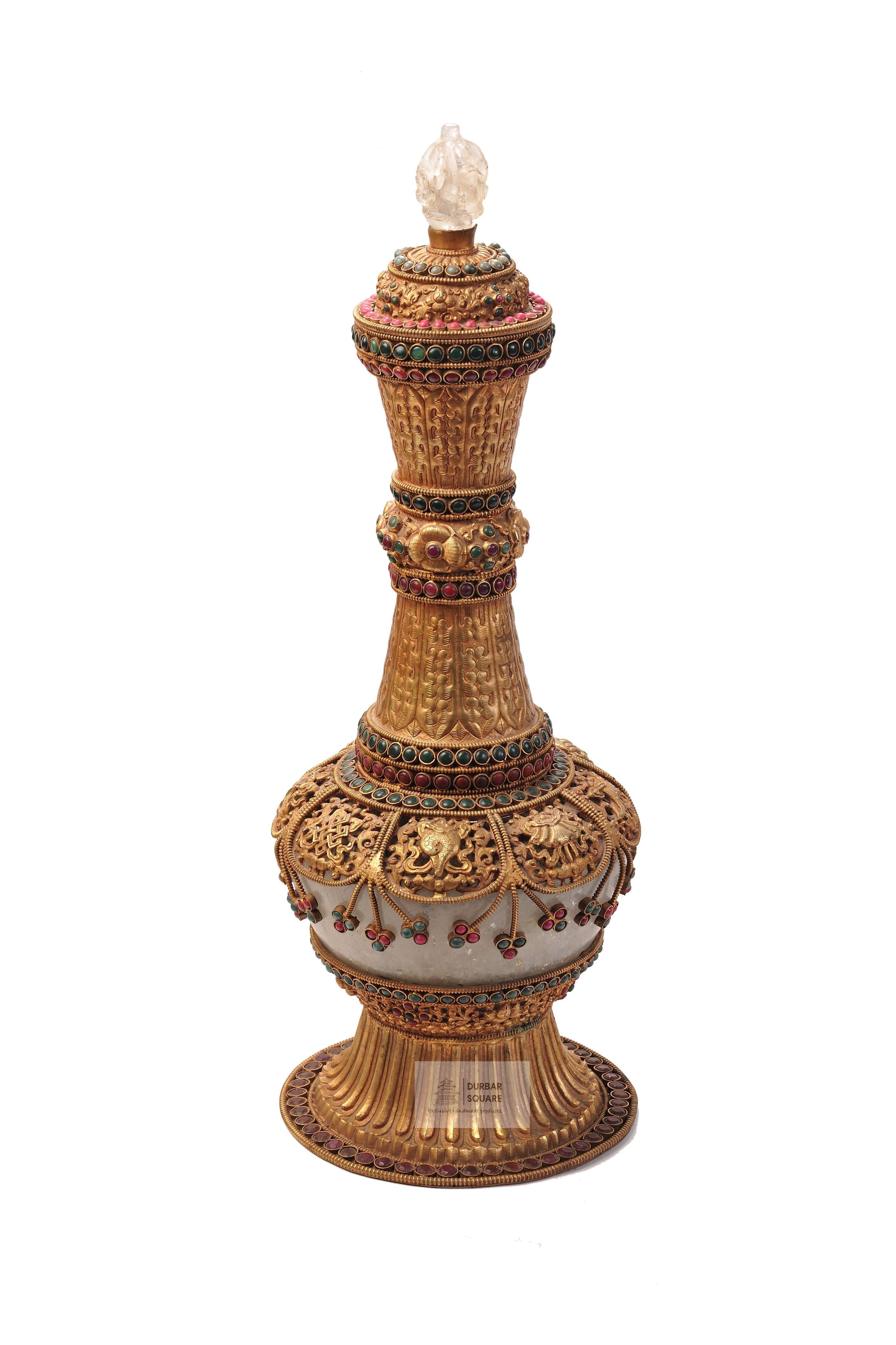
In North Indian temple architecture, the kalasha is the pot and crowning finial that sits at the very top of the spire above the sanctuary, the highest point of the sacred structure. As a ritual object, IMPART describes the kalasha as a vessel associated with creation, plenitude and good fortune in Hinduism, Buddhism and Jainism, often filled with water and plant material and placed at the center of ceremonies. Our handcrafted copper Kalash carries filigree carving, rubies, emeralds and quartz, engraved with the mantra Om Mani Padme Hum.
The surahi: Nepal's water jug
The surahi is the Himalayan water jug, traditionally made of clay for storing and serving water. In Newari culture there is also a festive use: aila, the home-distilled liquor made from fermented rice, which the Kathmandu Post describes as both an offering made to the gods and a gesture of hospitality to guests. According to our own product description, brass surahi pots like our carved Surahi Pot were traditionally used to serve it.
Other surahis in the collection take the form firmly into decoration: the copper Surahi is set with crystal quartz, rubies and emeralds, and the Carved Turquoise Coral Surahi pairs a partly gold-plated bronze body with quartz crystal.
From shrine to shelf
Used in ritual or kept as decorative art, each of these vessels carries a documented history with it. You can find them with other handcrafted objects in our decoratives collection.
Sources: Encyclopaedia Britannica, Kalasa and Puja; IMPART, Kamandalu and Kalasha; The Kathmandu Post, The Aila Diaries.