
Kalachakra: The Wheel of Time in Vajrayana Buddhism
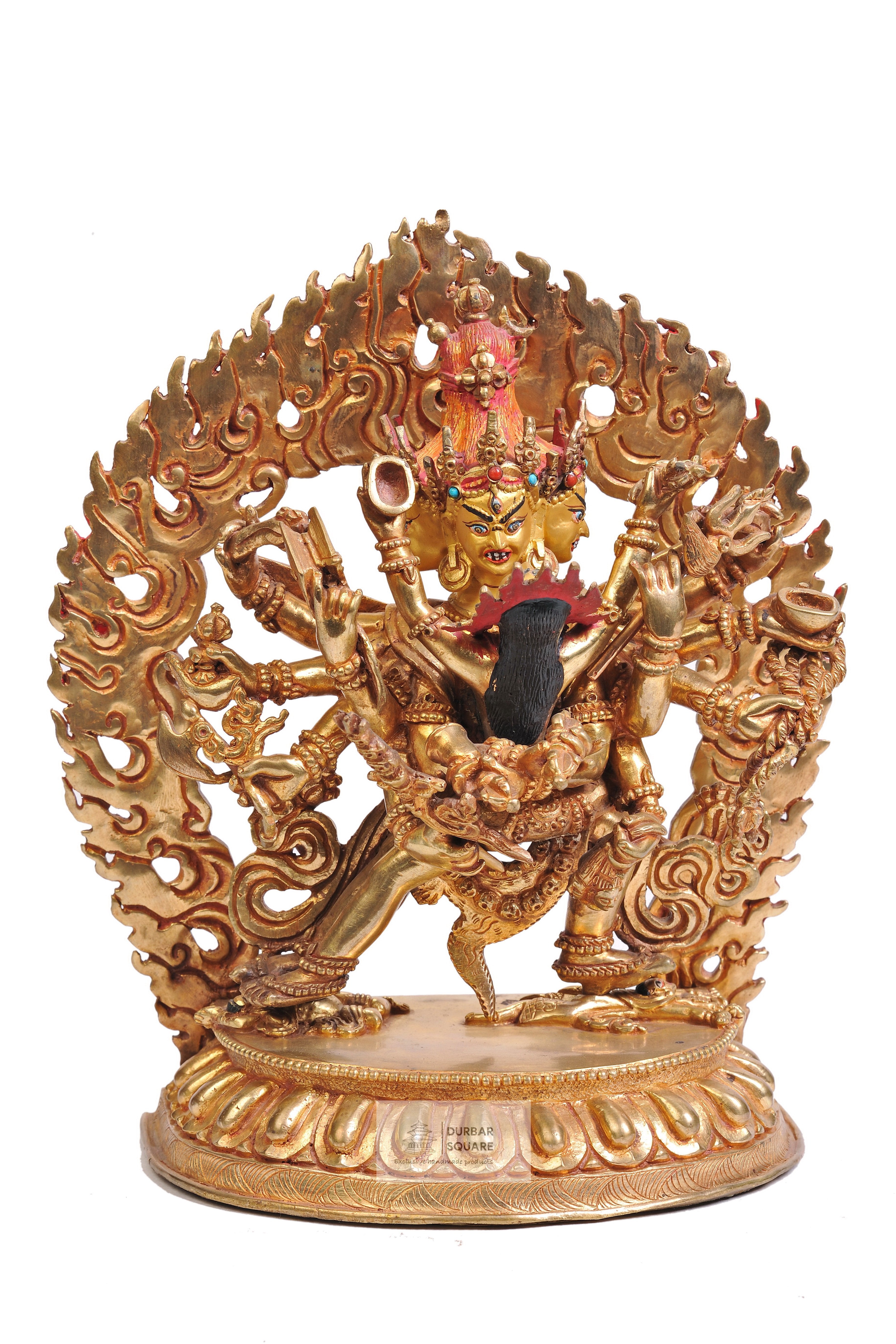
Kalachakra - the name means "wheel of time" or "time cycles", Wikipedia explains - is a polysemic term in Vajrayana Buddhism and Hinduism: the name of a series of Buddhist texts, of a major practice lineage in Indian and Tibetan Buddhism, and of a tantric deity, a yidam, at the heart of that tradition. Wikipedia places the tantra in the unexcelled yoga (anuttara-yoga) class. The Durbar Square range includes a gold-plated statue of the deity with his consort.
The texts and their history
The Kalachakra tradition holds that the teachings were taught in India by Gautama Buddha himself, Wikipedia records; according to the tradition, Shakyamuni manifested as the Kalachakra deities and taught the root tantra at a stupa in Dharanikota, and the teachings passed to the kingdom of Shambhala. Modern Buddhist studies, as Wikipedia summarizes them, date the original Sanskrit texts to the early decades of the 11th century CE, with the Shri Kalachakra and its Vimalaprabha commentary completed between 1025 and 1040 CE. The extant tantra is properly called the Laghu-kalachakratantra-raja, said to be abridged from a lost original, the Paramadibuddhatantra of the Shambhala king Sucandra; and Wikipedia cites the scholar Vesna Wallace calling Pundarika's Vimalaprabha the most authoritative commentary in the corpus.
The deity and his consort
As a deity, Wikipedia describes Kalachakra as a fierce, multi-armed blue figure in sexual union (yab-yum) with the consort Vishvamata, also called Kalacakri. In the reading Wikipedia presents, the pair represent the non-dual union of compassion and emptiness, of prajna and upaya: because Kalachakra is time, he knows all, while Kalacakri is aware of everything timeless - temporality and atemporality conjoined. The two reside, Wikipedia adds, at the center of the Kalachakra mandala, in a palace of four nested mandalas of body, speech, mind and, at the very center, wisdom and great bliss.
A living tradition
Kalachakra remains an active tradition of Buddhist tantra in Tibetan Buddhism, Wikipedia notes - emphasized particularly by the Jonang tradition - and its teachings and initiations have been offered to large public audiences, most famously by the 14th Dalai Lama, Tenzin Gyatso. The tradition's origins are in India, and its most active later history and presence, Wikipedia says, has been in Tibet.
The Kalachakra at Durbar Square
The Gold Plated Bhairab / Kaalchakra Shakti Statue ($1,186), as the listing names it, depicts the deity in union with his consort: a crowned, multi-armed figure standing on a lotus pedestal, arms holding ritual implements, enclosed in an openwork flaming mandorla. The listing presents the piece as handcrafted copper, partly gold plated with the face dusted with gold.
Sources
- Wikipedia: Kalachakra (name and meaning, textual history, the deity and Vishvamata, the living tradition)
- Durbar Square product listing (materials, technique and price)