
Buddha Statues: What the Hand Gestures (Mudras) Mean
Pick up a Buddha statue - in a museum, a temple or a living room - and the hands are doing something deliberate. These hand gestures, called mudras, form a deliberate vocabulary in Buddhist art, and learning even a few of them changes how you read a statue. Here is what the main ones mean, with the sources to check.
The five main mudras
The art-history resource smarthistory identifies five main mudras in Buddhist art: abhaya, dharmachakra, bhumisparsha, varada and dhyana, with others such as vitarka appearing as variations or derivations. Mudras also appear in Hindu and Jain iconography, which adopted them after they were established in Buddhism, according to the same essay.
Abhaya, the gesture of fearlessness, raises the right hand with the palm facing outward. It represents protection, peace and the dispelling of fear (Wikipedia: Mudra). Smarthistory's essay links abhaya to the Dhyani-Buddha Amoghasiddhi and notes a popular story in which the Buddha stops a rampaging elephant by extending his hand in this gesture.
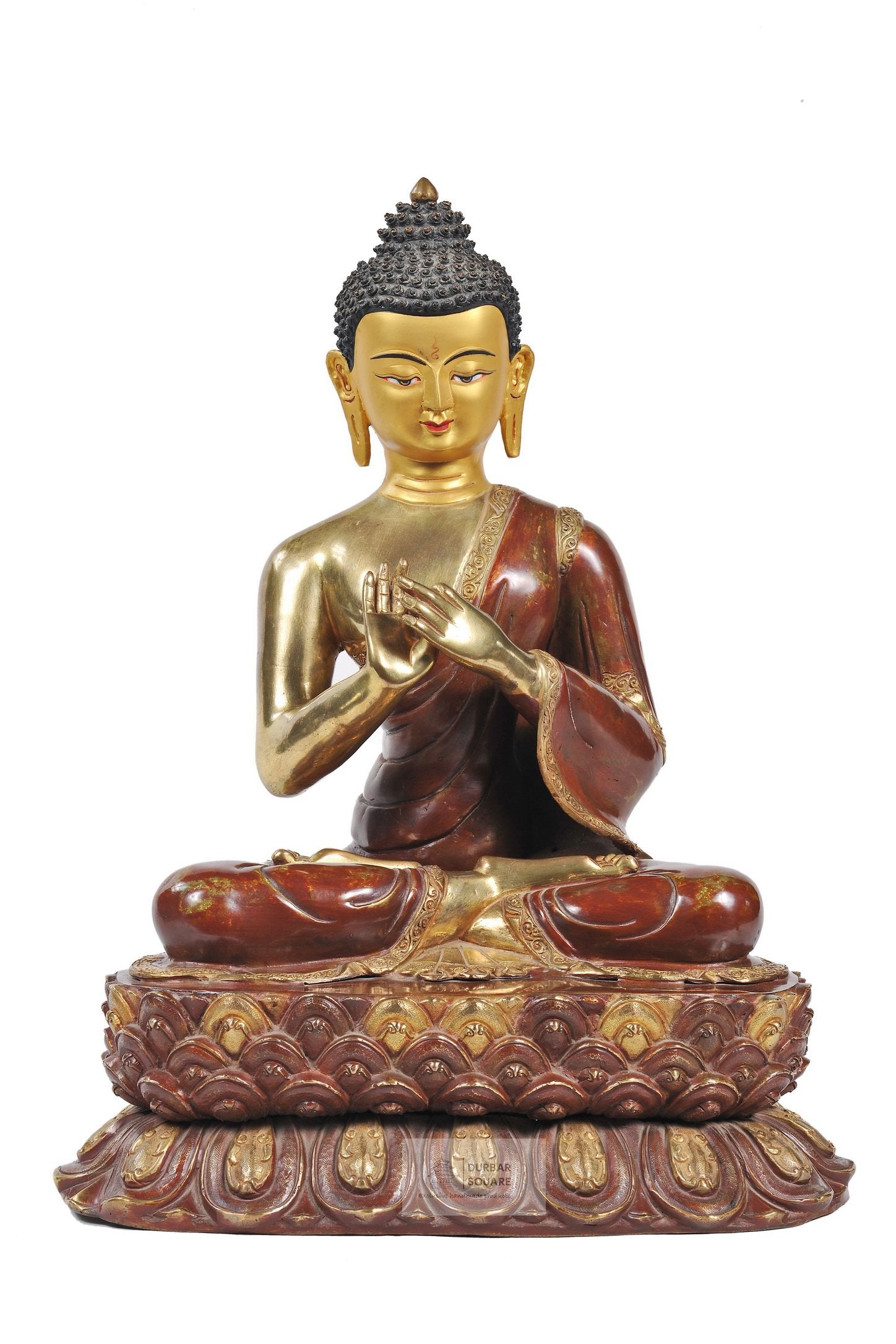
Dharmachakra, the wheel-turning gesture, holds both hands at the chest with thumbs and index fingers forming circles that touch. It refers to the Buddha's first sermon at Sarnath after his enlightenment - the setting in motion of the wheel of dharma. Smarthistory calls it the most common of the five main mudras in Buddhist art.
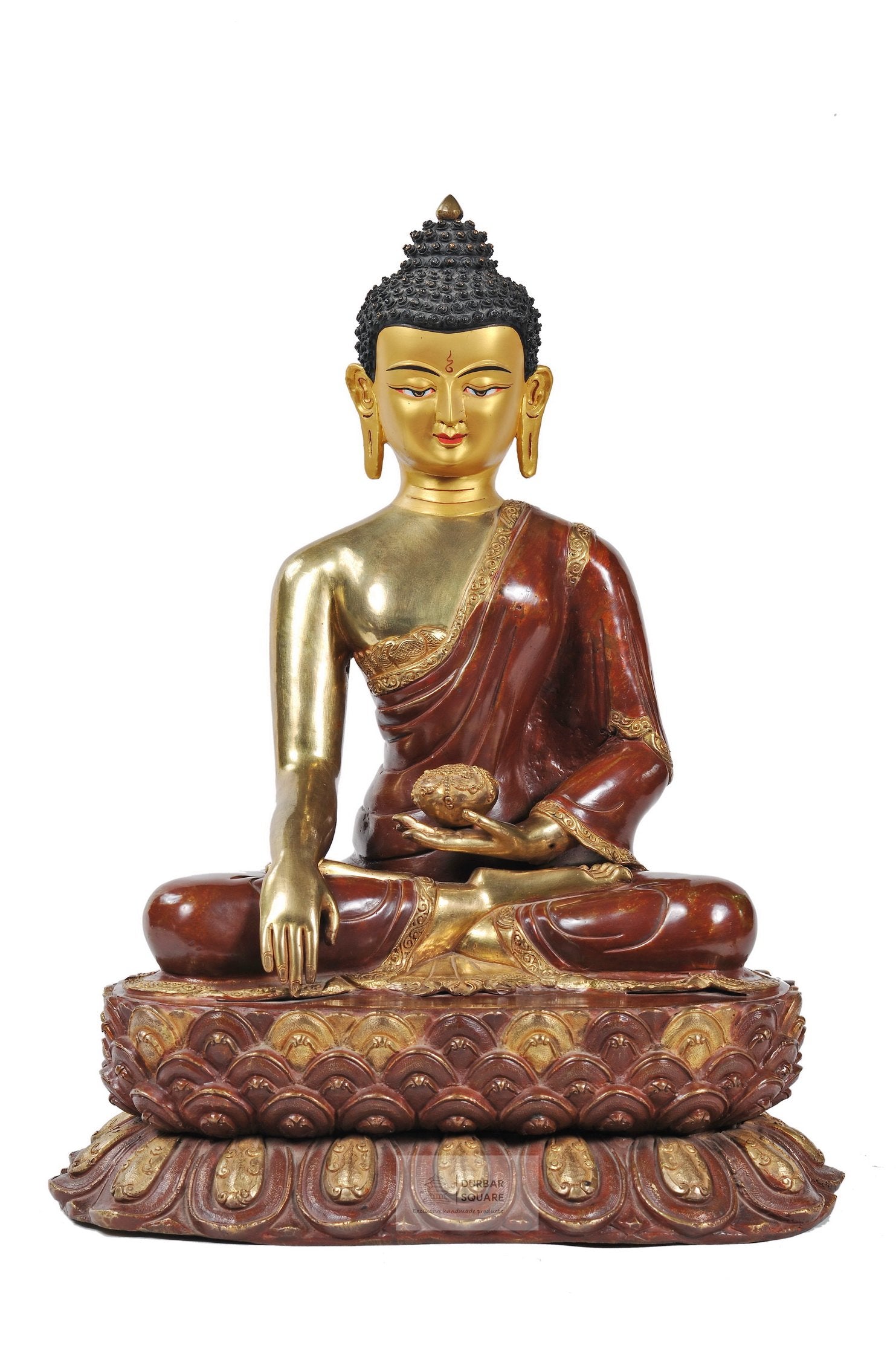
Bhumisparsha, the earth-touching gesture, shows the Buddha seated, right hand reaching over the knee to touch the ground, the left hand resting palm-up in the lap. It marks the moment of enlightenment: challenged by Mara to produce a witness, Siddhartha touched the earth, and the earth itself answered (Wikipedia: Mudra). Smarthistory's essay illustrates this gesture with a Nepalese terracotta figure of Akshobhya dated to the 16th-17th century, held by the Metropolitan Museum of Art - evidence of the gesture's long life in Nepalese sculpture.
Varada, the boon-granting gesture, angles the hand downward with the palm facing the viewer. It signifies generosity, welcome and compassion, and is associated with the Dhyani-Buddha Ratnasambhava (smarthistory).
Dhyana, the meditation gesture, rests both hands in the lap, right over left, palms upward, recalling Siddhartha meditating beneath the pipal tree. The triangle formed by hands and thumbs is read in the Chinese Wei tradition as a symbol of the Three Jewels (smarthistory).
Vitarka, the gesture of teaching
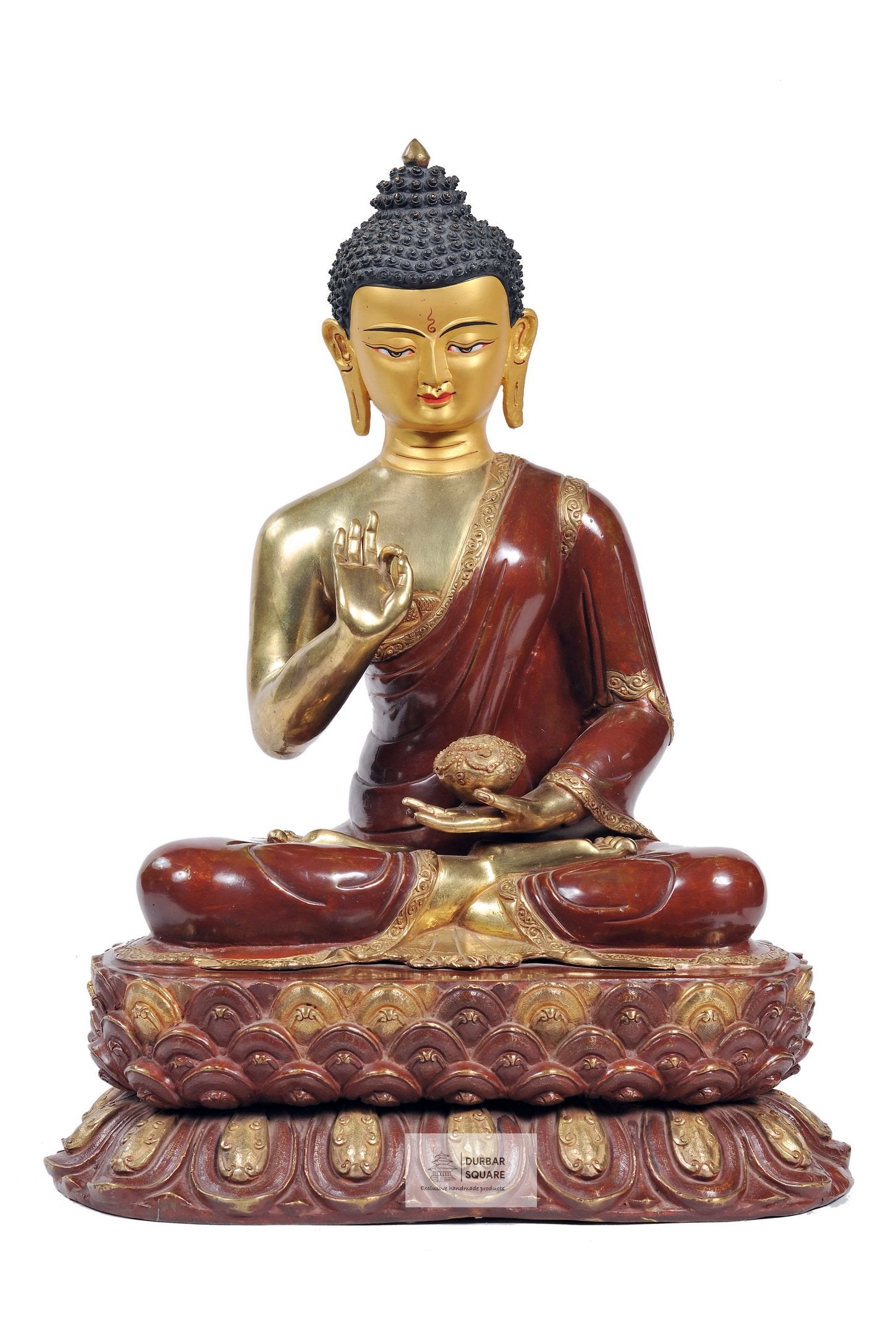
One variation you will meet often is vitarka: the hand raised, thumb and index finger joined in a circle, the other fingers extended. Wikipedia describes it as the gesture of discussion and transmission of Buddhist teaching - teaching carried in the hand rather than in words.
Mudras in our collection
Our Shakyamuni, Bhumisparsha "Earth Touching" Buddha Statue is a handcrafted copper gold-plated figure seated on a double lotus throne, right hand reaching down to the base, the left resting in the lap.
The Teaching, Dharmachakra Mudra Buddha Statue holds both hands at the chest in the wheel-turning gesture; our product description reads the circle of thumb and finger as the Wheel of Dharma, the union of method and wisdom.
And the Shakyamuni, Vitarka Mudra Buddha Statue raises the right hand, palm outward, thumb and index joined - the gesture of teaching and discussion the listing is named for. You will find more in our Buddha statues collection.
Sources: Wikipedia: Mudra; smarthistory: Mudras in Buddhist art; Metropolitan Museum of Art: Akshobhya, the Buddha of the Eastern Pure Land. Details of the three statues are from our own product listings.