
The Vajra (Dorje): Meaning of Buddhism's Thunderbolt Sceptre
Small enough to close a hand around, the vajra carries a symbolism that reaches back to the Vedas. It is at once a weapon from the Vedas, a ritual sceptre and, in the words of the Smithsonian's National Museum of Asian Art, an expression of "the power and indestructibility" of Buddhist teachings. Here is what the form means, and how to read one.
From Indra's thunderbolt to the Vajra Vehicle
According to the Rubin Museum's Project Himalayan Art, vajras in the Vedas are the indestructibly hard thunderbolts that Indra hurls at his enemies. Over time the vajra became the name for a type of ritual weapon, with a handle at the centre and a pronged point at each end, and it grew into a central image and symbol of tantric forms of Buddhism, often called Vajrayana, the "Vajra Vehicle". The National Museum of Asian Art notes that the word means literally "thunderbolt" or "adamantine", and that as a ritual implement it expresses the power and indestructibility of the teachings and the speed at which Buddhahood can occur when they are followed. Our own product description adds that in Sanskrit the word covers both thunderbolt and diamond, two images of the same idea: what cannot be broken.
The Tibetan name is just as evocative. The Rubin glosses dorje as "Lord among stones" (Rubin Museum).
Method and wisdom: the vajra and the bell
In ritual, the vajra is often paired with a bell. The Rubin Museum describes the vajra and bell as the most widely used implements in Tantric Buddhist rituals: the vajra sceptre represents method, compassionate action, while the bell represents wisdom, the understanding of reality. Used together, they represent the unity of these two key aspects of the enlightened mind (Rubin Museum: Vajra and Bell). The two objects often appear in paintings and sculpture, held by deities and human practitioners alike.
The vajra in art
In tantric iconography, several major figures are defined by the vajra they hold. Vajrapani, whose name means "vajra in the hand", brandishes one in his right hand; Vajradhara holds vajra and bell with hands crossed at his heart (Wikipedia: Vajra). The doubled form of the symbol, two vajras crossed, even appears in the national emblem of Bhutan.
One reading of a vajra kept at home is as a small reminder that clarity and compassion are meant to arrive together. Like all symbolism, it works best as an invitation, not a rule.
Vajras in our collection
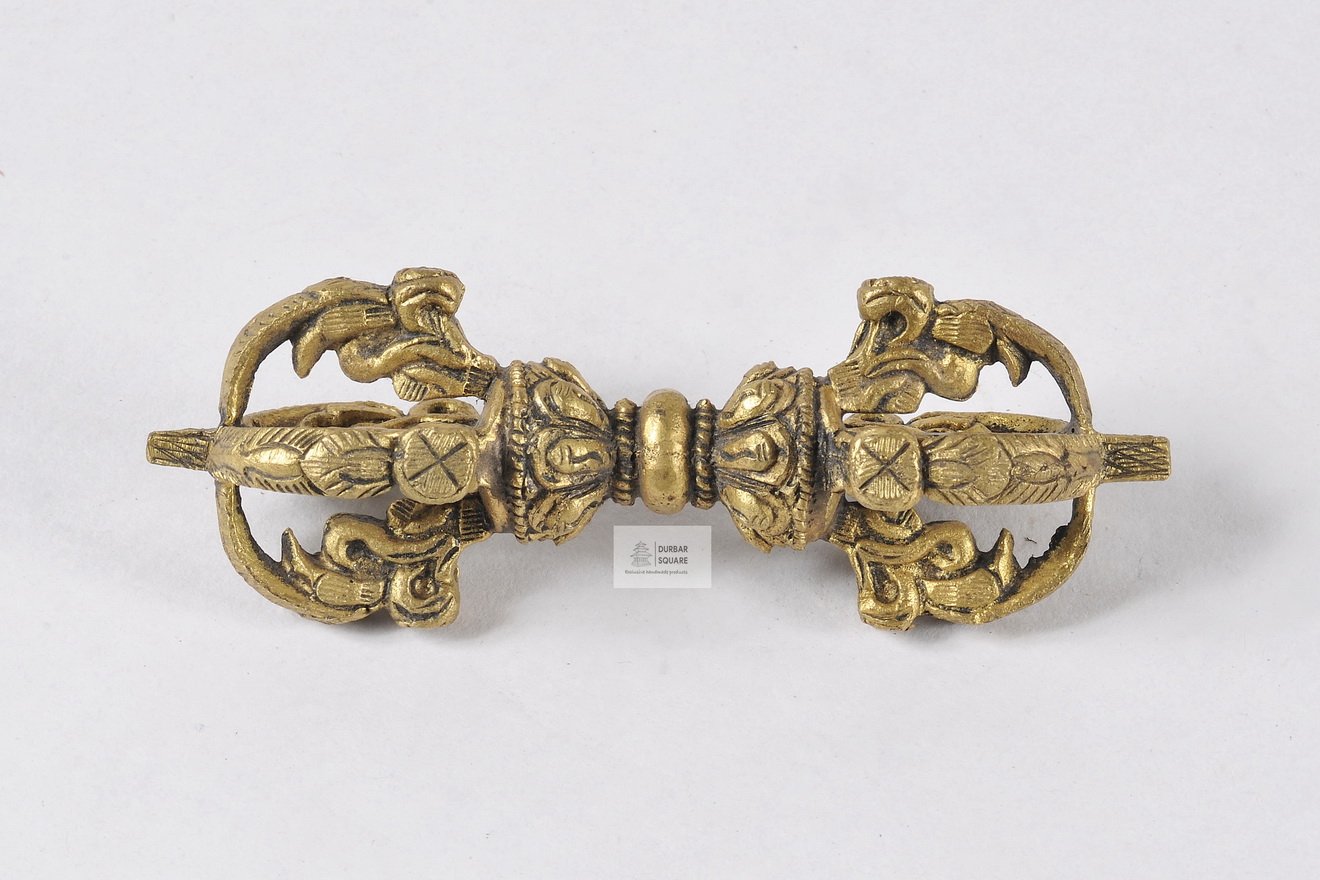
The Brass Vajra (Dorje) is a handcrafted brass vajra in the classic five-pronged form, its prongs curving in to meet a central point at each end.
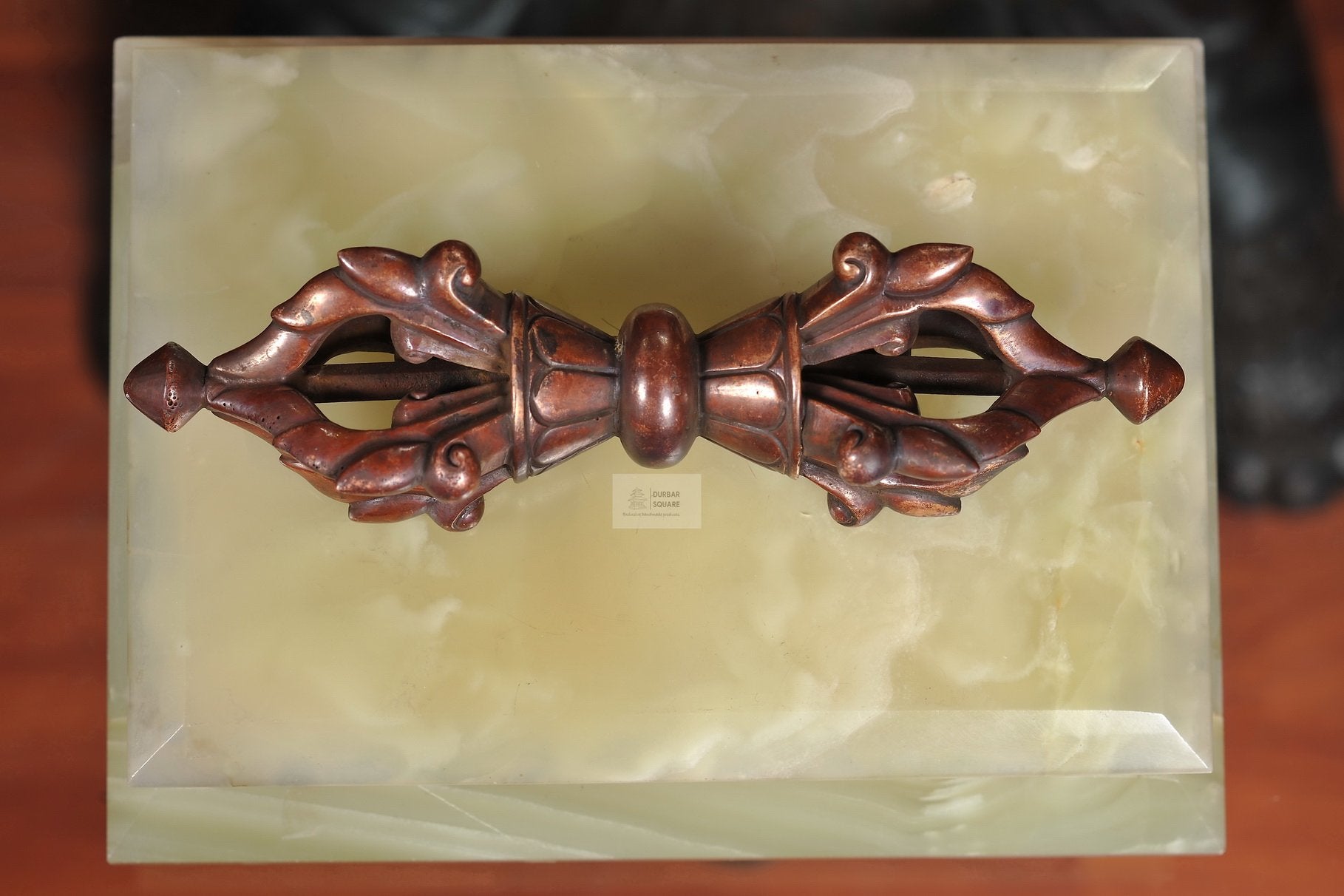
The Copper Vajra (Dorje) works the same form in handcrafted copper.
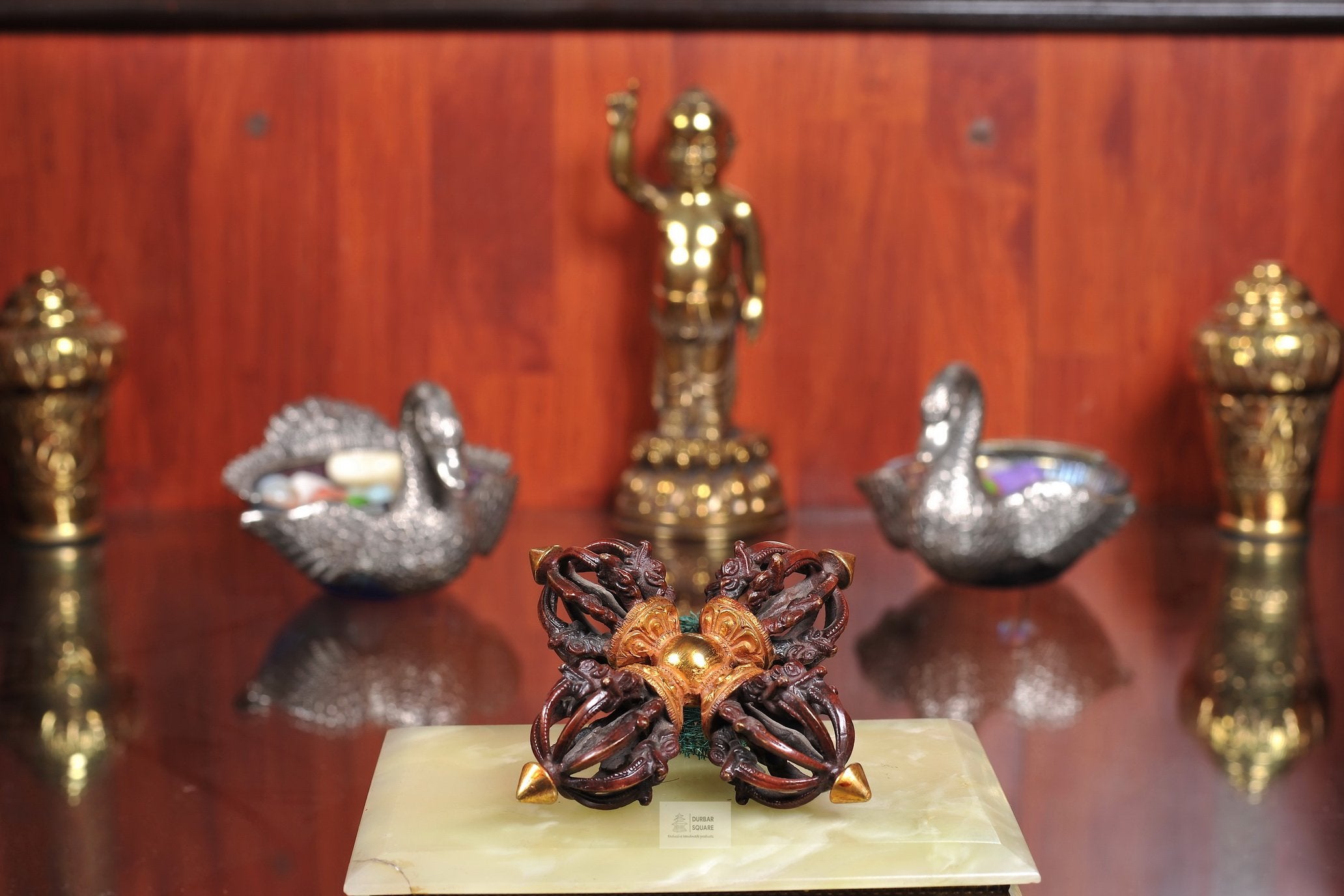
The Gold-Plated Copper Vajra is the doubled form: as our product description explains, a Bishwa Bajra is created by two vajras crossed together, four vajra heads sitting at the cardinal points of a central hub.
Sources: Rubin Museum, Project Himalayan Art: vajra; Rubin Museum: Vajra and Bell; National Museum of Asian Art: vajra; Wikipedia: Vajra. The Sanskrit gloss "thunderbolt and diamond" and the Bishwa Bajra description are from our own product descriptions.