
Tingsha: The Small Cymbals of Tibetan Buddhist Ritual
Tingsha - Tibetan ting-shags, in Wikipedia's Wylie transliteration - are small cymbals used in prayer and rituals by Tibetan Buddhist practitioners. As Wikipedia describes them, two cymbals are joined by a leather strap or chain and struck together, producing a clear, high-pitched tone; typical sizes run from 2.5 to 4 inches in diameter. The Durbar Square range includes a handcrafted bronze pair.
A long, ringing tone
Wikipedia notes that tingsha are very thick cymbals, and that this is what gives them their distinctive long ringing tone; antique examples, the same source adds, were made from special bronze alloys that produce harmonic overtones. The sound is the point: the two cymbals are struck together, and the tone sustains.
The designs they carry
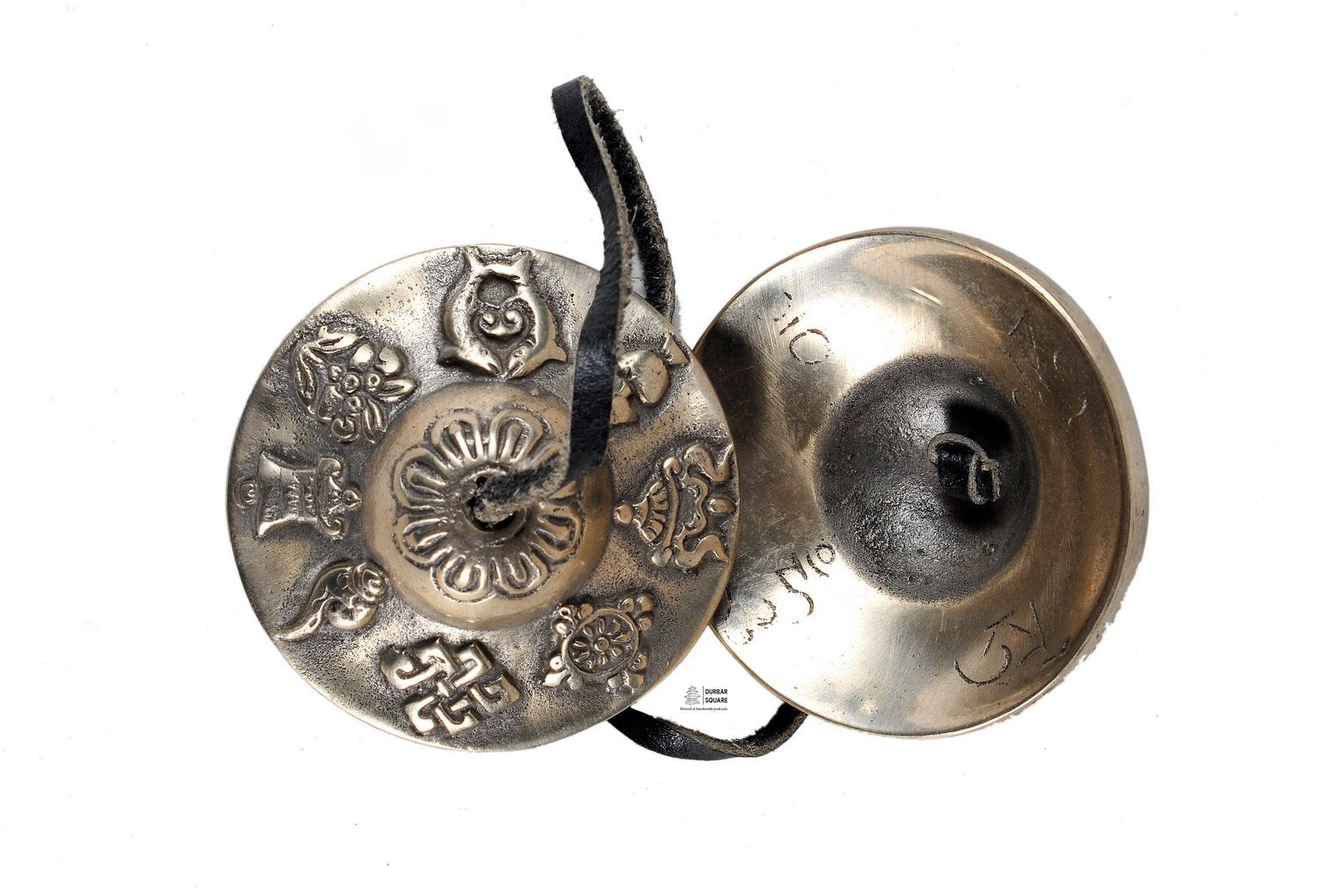
Among the examples Wikipedia illustrates are tingsha designed with the eight auspicious symbols - the Ashtamangala - and Tibetan tingsha bells with the mantra Om Mani Padme Hung written around them, two of the decorative traditions these small ritual cymbals carry.
The tingsha at Durbar Square
The Ashtamangala Engraved Tingshya Bells ($83) are, per the listing, handcrafted bronze chimes with Ashtamangala symbols engraved on the front, joined by leather straps and given an antique finish; the photo shows a pair of round bronze cymbals with embossed emblems around a central petal design. The listing describes them as used in meditation practices to help focus the mind and, played by striking the two edges together, as producing a pure, bright bell sound that rings for a long time - and notes they are also used to add depth to musical soundscapes.
Sources
- Wikipedia: Tingsha (name, use, construction, tone and designs)
- Durbar Square product listing (materials, engraving, use and price)